


Hardscape Design: Costs, Drainage, Carlson Park
Hardscaping is the backbone of outdoor living design. It includes every non-living element: patios, walkways, retaining walls, driveways, fire pits, outdoor kitchens, and water features. Good hardscape design creates the structure that landscaping and furniture fill in. Here is how to plan and budget a hardscape project for Southern California.
1. Hardscape Elements and Costs
Patios
The foundation of outdoor living. See our detailed concrete patio guide for finish options.
Concrete: $6-20 per square foot depending on finish.
Pavers: $12-25 per square foot.
Natural stone: $20-40 per square foot.
Retaining Walls
Essential for sloped properties. Create level areas and prevent erosion.
Concrete block (CMU): $30-60 per square foot of wall face.
Segmental (SRW): $20-40 per square foot.
Natural stone: $40-80 per square foot.
Outdoor Kitchens
Built-in cooking and entertaining areas.
Basic (grill + counter): $5,000-10,000.
Mid-range (grill + sink + fridge): $10,000-25,000.
Premium (full kitchen with seating): $25,000-50,000+.
Fire Features
Gas fire pit: $2,000-5,000 built-in.
Outdoor fireplace: $5,000-15,000.
Fire and water bowl: $3,000-8,000.
Water Features
Pondless waterfall: $3,000-8,000.
Fountain: $1,000-5,000.
Koi pond: $5,000-15,000+.
Driveways
Concrete: $6-12 per square foot.
Pavers: $12-25 per square foot.
Stamped concrete: $12-20 per square foot.
2. Design Principles for Southern California
Drainage First
Every hardscape project starts with drainage planning. Water must flow away from the house, not toward it. Minimum 1-2% slope on all flat surfaces. French drains and catch basins handle volume beyond surface grading.
Permeable vs Impervious
Many California cities encourage or require permeable hardscape to manage stormwater. Permeable pavers, gravel areas, and open-joint installations allow water to infiltrate instead of running off.
Shade Integration
Design patios and seating areas with shade structures from the start. A patio without shade is unusable for half the day in Southern California.
Material Cohesion
Choose 2-3 complementary materials maximum. Too many materials creates a chaotic look. Example: brushed concrete patio + flagstone walkway + CMU retaining wall with stone veneer.
3. Project Planning
Phase 1: Design ($1,000-5,000)
Professional landscape/hardscape design with scaled drawings, material specifications, and drainage plans. Worth the investment for projects over $15,000.
Phase 2: Permits ($200-2,000)
Grading permits, building permits for structures, plumbing permits for gas/water. Timeline: 2-6 weeks depending on jurisdiction.
Phase 3: Demolition and Grading
Remove existing hardscape, regrade as needed. Cost: $2-5 per square foot for demolition, $1,000-5,000 for grading.
Phase 4: Infrastructure
Underground utilities (gas, water, electrical), drainage systems, retaining wall foundations. This is the most expensive phase per visible result.
Phase 5: Hardscape Installation
Concrete, pavers, stone, structures. The visible transformation.
Phase 6: Landscaping and Finishing
Plants, mulch, lighting, furniture. The final layer that brings it all together.
4. Budget Ranges
Starter ($5,000-15,000): New patio + basic landscaping.
Mid-Range ($15,000-40,000): Patio + fire pit + walkway + landscape lighting.
Premium ($40,000-80,000): Patio + outdoor kitchen + retaining walls + full landscaping.
Luxury ($80,000-150,000+): All of the above + pool remodel + water features + premium materials.
5. Hiring a Hardscape Contractor
Look For:
Active CSLB license verified on cslb.ca.gov (look up the number to confirm it is current).
Portfolio of completed hardscape projects.
Written contract with material specifications.
Drainage plan included in the proposal.
Engineering for retaining walls over 3 feet.
Avoid:
Contractors who skip the drainage plan.
Bids that do not specify materials by name.
Anyone requesting more than $1,000 or 10% deposit.
6. Worked Example: A Carlson Park Brick Walkway
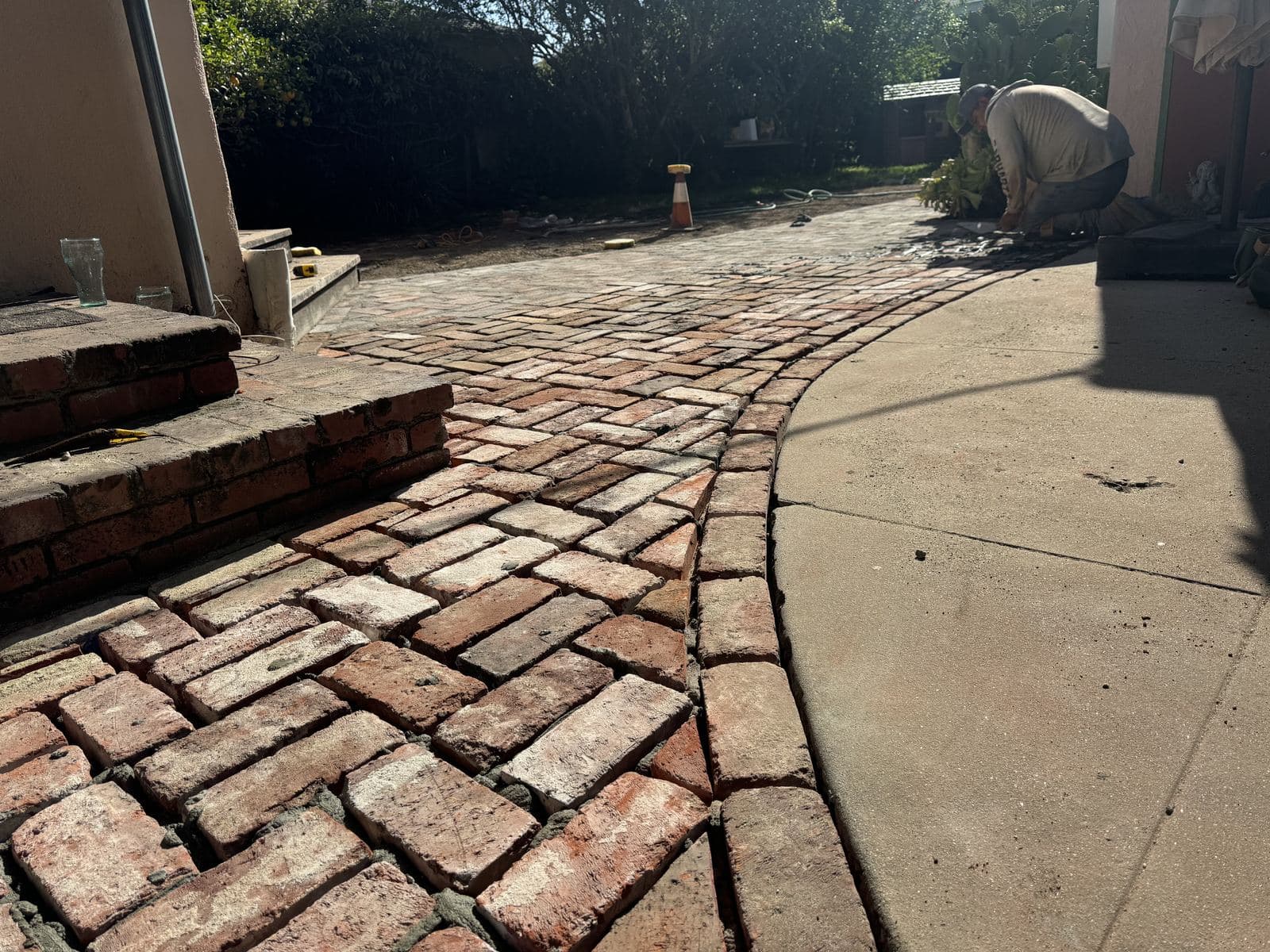
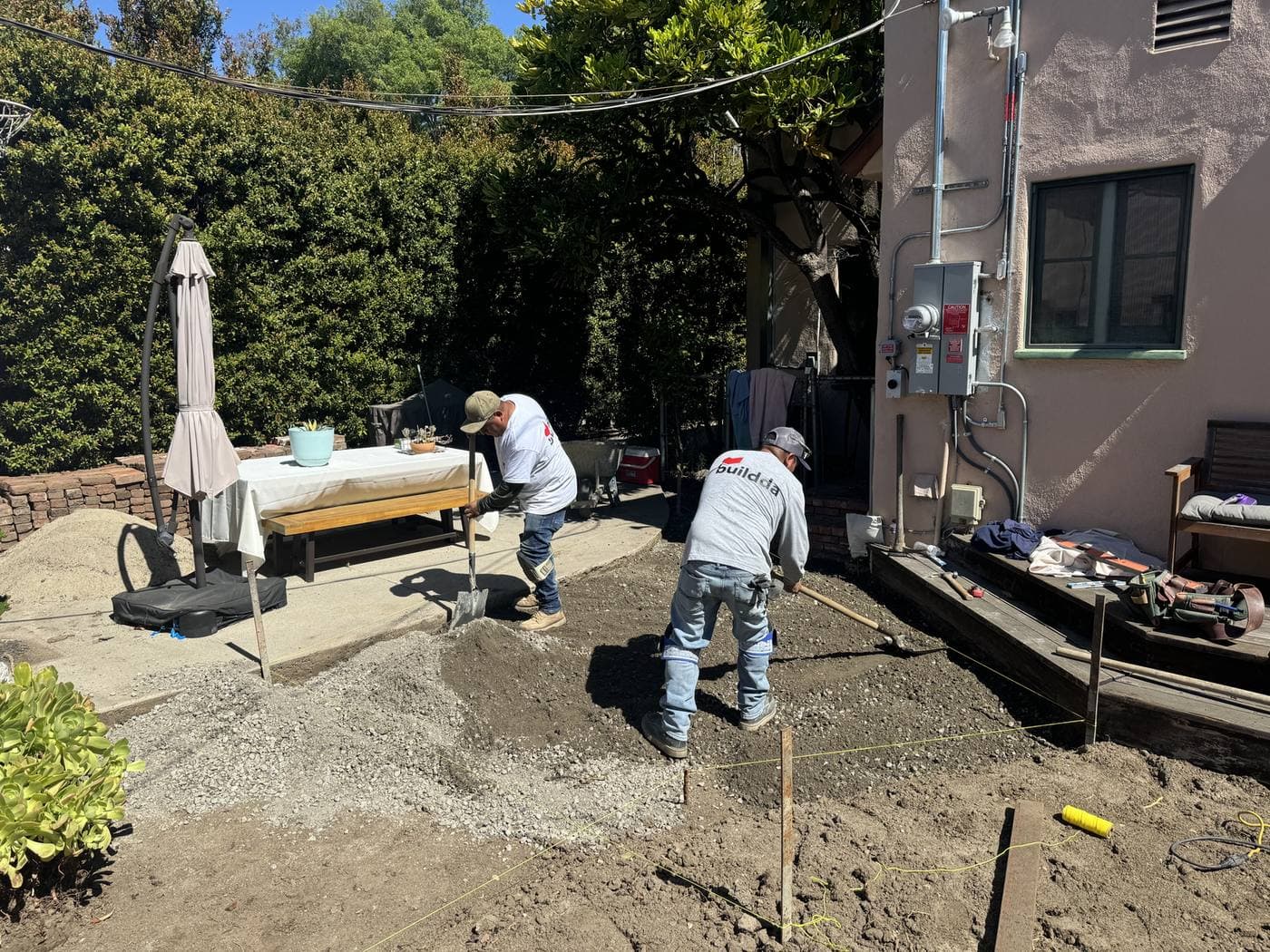
Most hardscape failures look like surface problems and turn out to be substrate problems. We saw a clear version of this on a recent Carlson Park, Culver City project: the homeowner had a beautiful, decades-old brick path through the backyard of a 1931 Spanish-style cottage that had been failing for years. Bricks shifted underfoot. Water pooled every rainy season.
Two underlying problems. First, a tree had been removed years earlier and the ground had been slowly settling as the root mass decomposed. Second, the original walkway had no drainage slope, so water sat on the surface, found the joints, and worked them loose.
The fix illustrates the hardscape-as-a-system principle. We rebuilt the substrate (clean dirt brought in, compacted in 4-6 inch lifts), added a 4-inch compacted aggregate base, designed an organic drainage slope verified with a rotating laser level, screeded a mortar bed, and laid 300 sqft of reclaimed brick (sourced from 10-15 salvage yards to match the home's existing rusty character). Polymeric sand at the joints locks the field in place; standard sand washes out within a few rainy seasons.
The lesson generalizes. Whether you are designing a patio, a walkway, a paver driveway, or a stone garden path, the surface material is the visible part; the substrate, drainage, base, and joint material determine whether it lasts 5 years or 50.
7. Frequently Asked Questions
How long does a hardscape project take?
Small (patio only): 1-2 weeks. Medium (patio + walkway + fire pit): 3-6 weeks. Large (full backyard with walls, kitchen, lighting): 8-16 weeks. Add 2-6 weeks for permits before construction begins.
Does hardscaping increase home value?
Yes. Outdoor living improvements return 50-80% of cost at resale in California. Well-designed hardscape also reduces time on market.
Can I hardscape in phases?
Yes, but plan the whole project first. Install underground infrastructure (drainage, gas, electrical conduits) in Phase 1 even if you build features later. Retrofitting underground work is 3-5x more expensive.
8. Choosing Materials: Concrete vs. Pavers vs. Natural Stone
The three main hardscape surface choices each have real trade-offs.
Concrete is the lowest cost option per square foot and handles heavy loads (driveways, large patios) without issue. It pours as a single slab so the surface stays flat for furniture and chairs. The downsides: cracks are inevitable as the concrete cures and the ground settles, and color choices are limited to integral colors, stains, or stamped patterns. Repairs often require breaking out a section and pouring new concrete, which leaves a visible seam.
Pavers (interlocking concrete units) cost more per square foot but solve concrete's biggest weaknesses. Individual pavers can be lifted and reset if the ground settles, the surface flexes with seasonal soil movement instead of cracking, and color and pattern choices are nearly unlimited. The trade-off: weeds can grow between joints if polymeric sand is not maintained, and the joint lines collect debris over time.
Natural stone (flagstone, travertine, bluestone) is the premium option. Each piece is unique, the look is timeless, and stone outlasts both concrete and pavers when installed correctly. Downsides: highest cost, slower installation, and uneven surfaces are common with irregular shapes. Travertine in particular is sensitive to acidic cleaners and can etch from improper care.
For most Southern California backyards, pavers offer the best balance of cost, durability, and design flexibility. Concrete makes sense for utility areas (side yards, RV parking) where appearance matters less. Natural stone is worth the premium on focal-point patios and entries where the cost spread is small relative to the visual impact.
9. Hardscape Maintenance Schedule
Hardscape is durable, but it still needs upkeep. A simple annual rhythm extends the life of every surface.
Spring (March-April):
Inspect for winter damage (cracks, settling, heaved sections). Pressure wash patios and walkways. Reseal stamped or colored concrete every 2-3 years. Top off paver joint sand if you see weed growth or open joints.
Summer (June-August):
Check drainage. Run a hose at the upslope edge of patios and confirm water flows away from structures. Trim plants growing into hardscape edges. Reseal natural stone surfaces with penetrating sealer if water no longer beads on the surface.
Fall (October-November):
Clean up leaves before they stain pavers and stone. Inspect outdoor kitchens, fire features, and water features for shutdown if you do not use them in winter. Drain and cap exposed water lines if you live in a higher-elevation area where freezes are possible.
Winter (December-February):
Watch for water pooling after rain. Standing water means a drainage failure that needs attention before the next storm cycle. Inspect retaining walls for any signs of bulging, cracking, or shifting after heavy rain.
Budget $500-1,500 annually for routine hardscape maintenance on a typical Southern California property. Skipping maintenance shortens lifespan dramatically and turns small repairs into major rebuilds.
10. Common Hardscape Mistakes to Avoid
After completing many hardscape projects, the same handful of mistakes show up again and again.
Underestimating drainage. Water finds the path of least resistance. If that path runs toward a foundation, garage, or neighbor's property, you have a problem that gets worse every storm. Drainage planning is not optional and not something to value-engineer out of a project.
Skipping the base. The visible surface is only as good as what is under it. Pavers without a properly compacted aggregate base will settle within a year. Concrete poured on uncompacted dirt will crack and shift. A 4-6 inch base of crushed aggregate compacted in lifts is standard for patios and walkways.
Ignoring expansion joints. Concrete needs control joints (saw cuts) every 8-10 feet to manage where it cracks. Skipping these guarantees random cracks across the slab. Expansion joints around the perimeter of a slab let it move without pushing against adjacent structures.
Choosing a contractor on price alone. The cheapest hardscape bid is almost always the most expensive long-term. Look for contractors who include drainage, base work, and engineering in writing. A 30 percent higher bid that includes proper base preparation is the better investment over a low bid that saves money by skipping the foundation.
Building too close to property lines. Most California cities require setbacks for retaining walls, structures, and even paved surfaces. Confirm setback requirements before you mark out the project.
Local Tip: Hardscaping in Culver City
Culver City requires permits for hardscape projects that alter drainage or add significant impervious surface. The city encourages permeable hardscape materials to manage stormwater. Interlocking pavers with open joints, permeable concrete, and gravel areas all qualify. Check with Building Safety about your specific project scope.
Local Tip: Coastal Hardscaping
In Santa Monica and Venice, the higher water table near the coast means proper drainage under hardscape is essential. French drains and gravel base layers prevent water from pooling under pavers. Marine-grade polymeric sand in paver joints resists salt and coastal moisture better than standard sand.
Get Hardscape in Your Area
Professional contractors serving the Greater Los Angeles area
Popular service areas:
Also explore related services:


