


Reclaimed Brick Walkway: Carlson Park Case Study
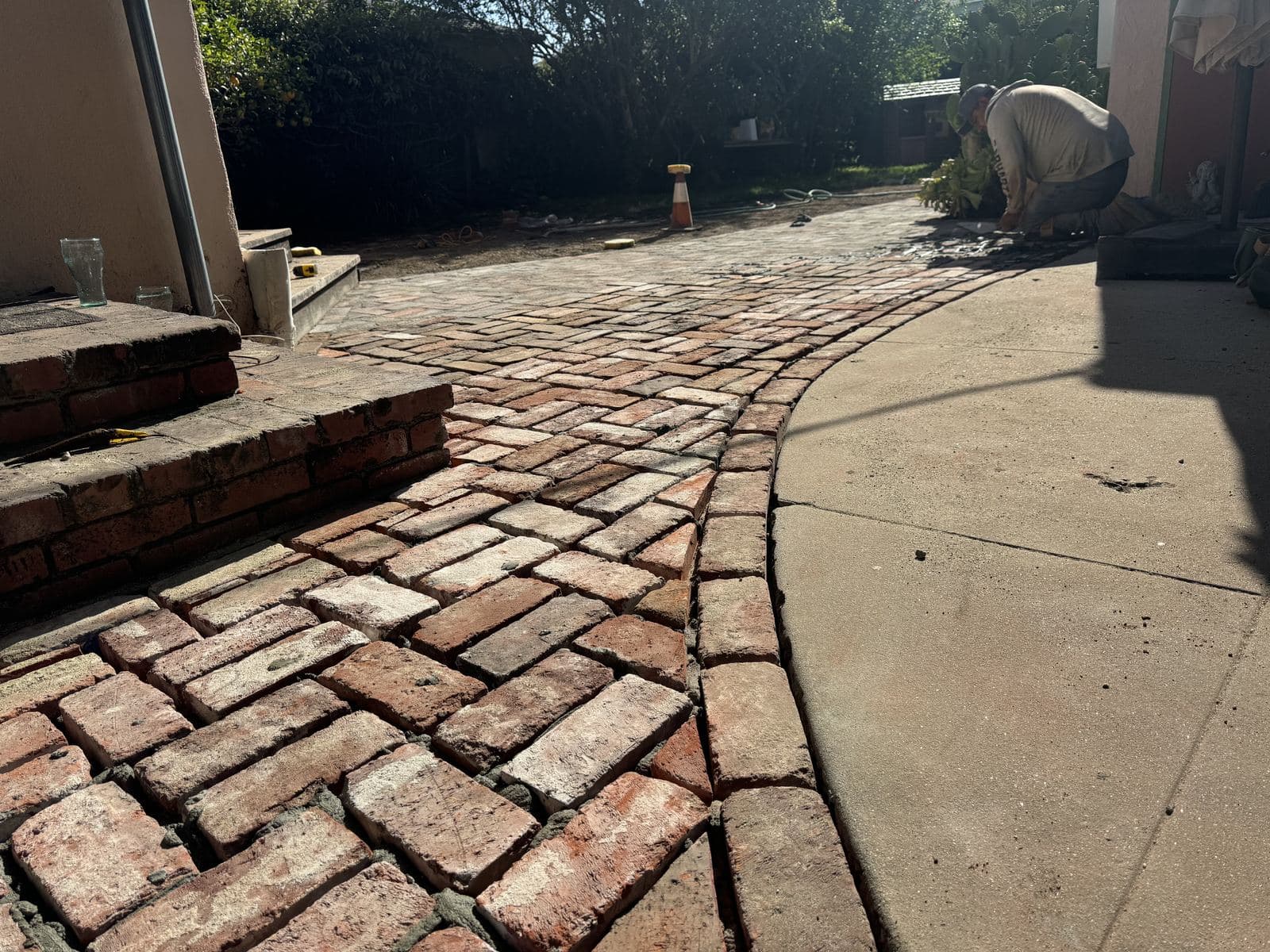
A walkway in Carlson Park, Culver City called us out because the brick path through the backyard was sinking and water pooled every rainy season. The visible problem was the brick. The actual problem was the ground three feet underneath.
We had to fix what was below before we could lay anything on top. That story, and what every Southern California homeowner should know about walkway design, is what this guide covers.
1. The Carlson Park Project
The homeowner had a beautiful, decades-old brick path in the backyard of a 1931 Spanish-style cottage. Aged, mismatched, rusty character, exactly the look they wanted to keep. But the path had been failing for years. Bricks shifted underfoot. Every rainy season, water stood on it. The backyard had a one-of-a-kind feel that the homeowner was protective of, and our job was to fix the function without losing that look.
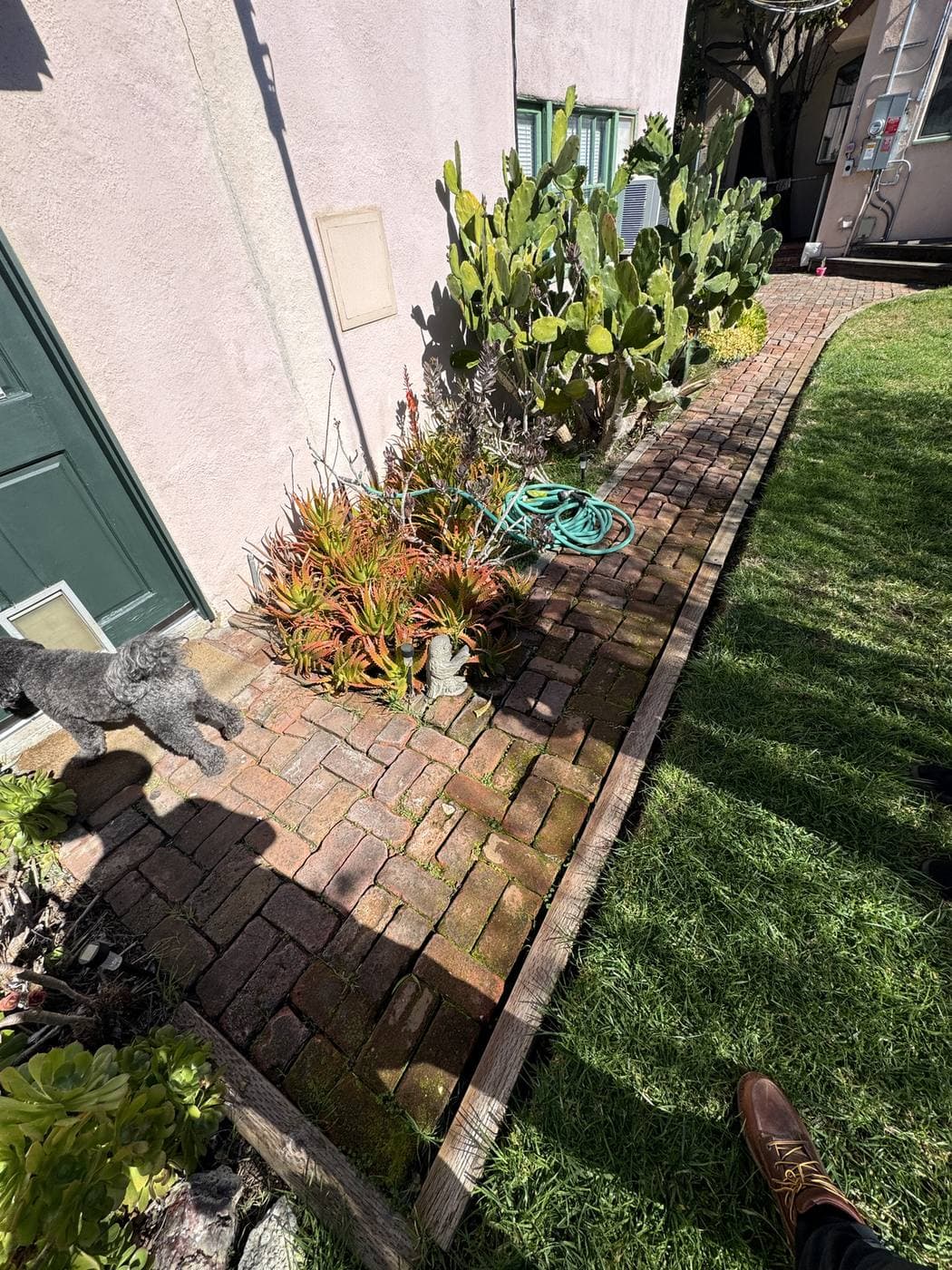
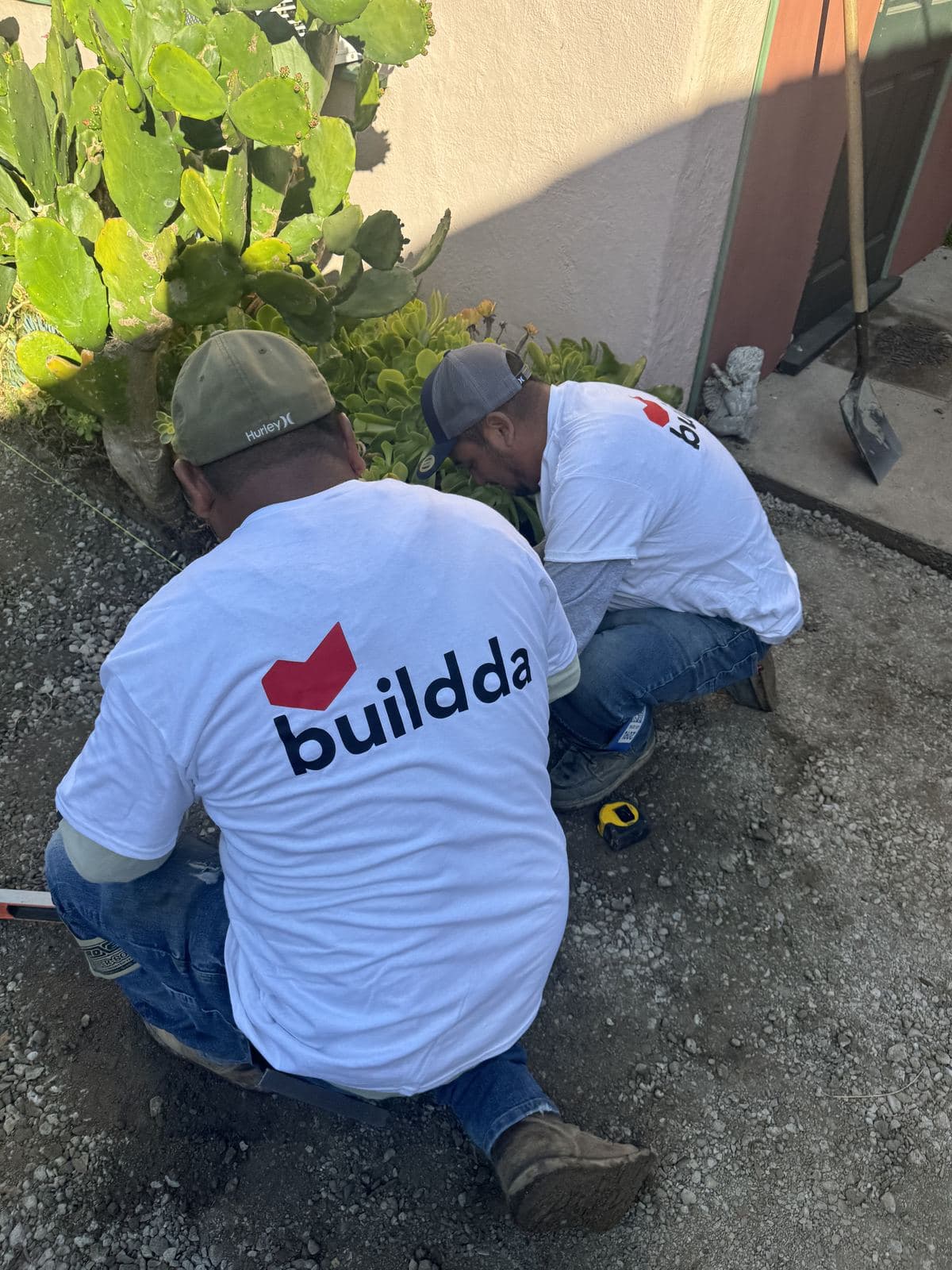
When we pulled it apart, we found two compounding problems. First, a tree had been removed from that area years earlier, and the ground had been slowly settling as the old root mass decomposed. Anything sitting on top, including the previous walkway, was sinking with it. Second, there was no drainage plan. The path was flat, the base was thin, and water that hit the surface had nowhere to go.
That is why this guide leads with the unglamorous part: the base under your walkway determines whether it lasts 5 years or 50.
2. Why Walkways Fail (and the 4-6 Inch Rule)
The pattern is consistent across every walkway failure we see:
Inadequate base. Pavers and brick sit on a thin layer of sand over native soil instead of 4-6 inches of compacted gravel. The first heavy rain washes out the sand, and the surface settles unevenly.
Native soil not compacted. Disturbed soil (recent grading, removed roots, irrigation trenches) keeps settling for years.
No drainage slope. Water sits on the surface, finds the smallest crack, and works the joints loose.
Joints not sealed. Standard sand washes out of paver and brick joints in a few rainy seasons. Polymeric sand activates with water to lock the joints in place.
Get the base, the soil compaction, the slope, and the joints right and the walkway lasts decades. Skip any one of them and you are rebuilding in five years.
For our Carlson Park project, the base required clean dirt brought in and compacted in lifts to make up for the settling. Then 4 inches of compacted aggregate. Then a screeded mortar bed. Then the brick.
3. Walkway Materials Compared
Each material has a different cost band, lifespan, and look. None of them is universally right, the answer depends on the home, the use, and the budget.
Concrete - Most affordable. Can be brushed, stamped, stained, or scored. Cost: $6-12 per square foot for standard, $12-20 for stamped or decorative. Lifespan: 25-50 years.
Concrete Pavers - Interlocking units, wide pattern and color options. Individual units replaceable if damaged. Cost: $12-25 per square foot. Lifespan: 25-50 years.
Natural Stone (Flagstone) - Irregular pieces set in mortar or on sand. Organic, high-end look, every walkway different. Cost: $15-30 per square foot. Lifespan: 50+ years.
Brick - Classic look that suits Spanish, Craftsman, and traditional architecture. New brick: $10-20 per square foot. Reclaimed brick: $15-30 per square foot, depending on sourcing.
Decomposed Granite (DG) - Crushed stone that compacts into a firm surface. Permeable, budget-friendly, but needs replenishment every 3-5 years. Cost: $3-6 per square foot installed. Add $1-2/sqft for stabilizer to reduce tracking.
4. New Brick vs. Reclaimed Brick
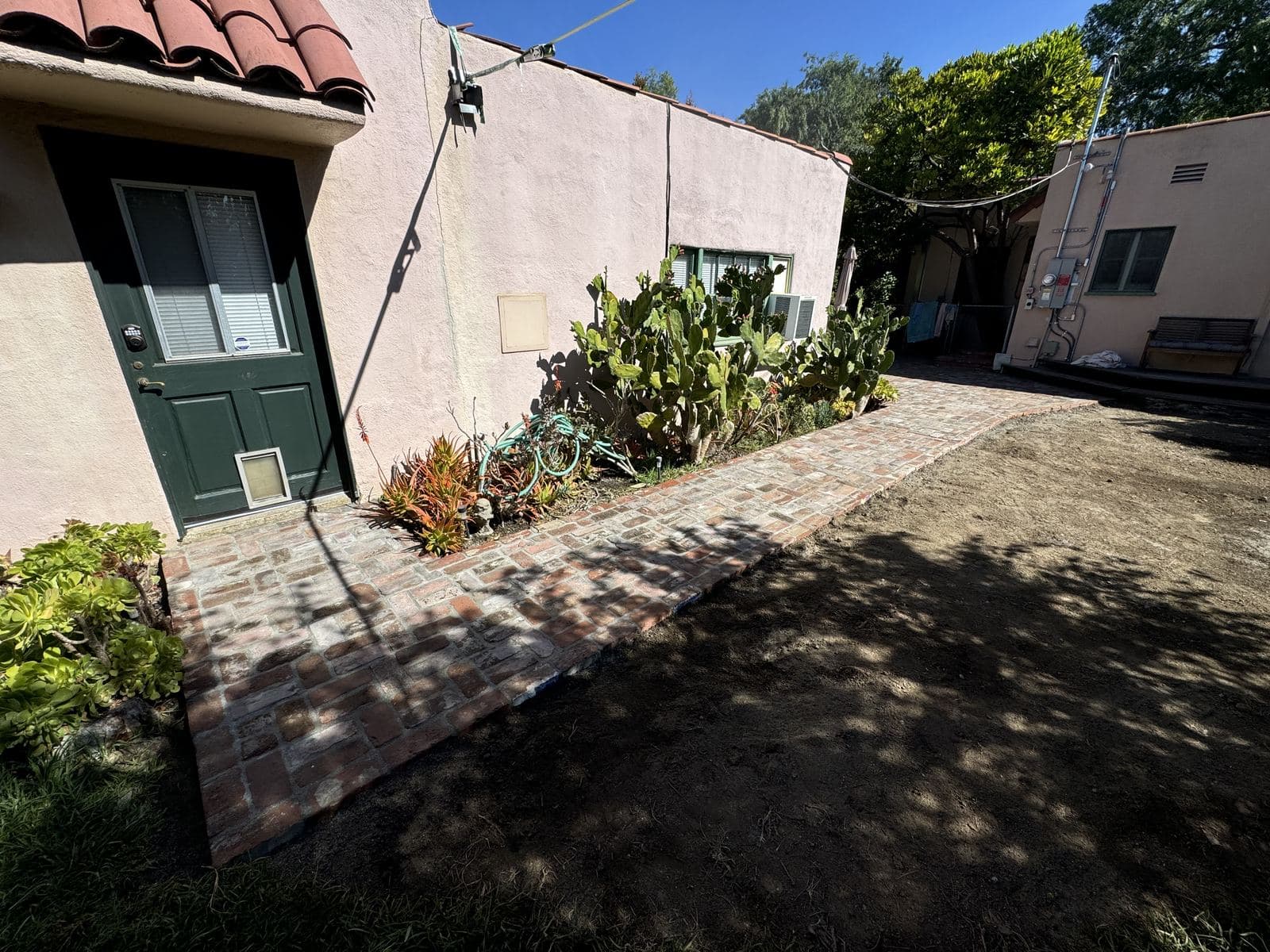
Reclaimed brick is what gave the Carlson Park walkway its character. New brick comes off a pallet in uniform color and crisp edges, which is right for some homes and wrong for a 90-year-old Spanish cottage. The original walkway had rusty, weathered, slightly mismatched bricks. Replacing those with new brick would have visibly clashed with the home.
Sourcing reclaimed brick is the hard part. We drove through 10-15 salvage and supply yards across the LA area looking for a batch with the right color tone, weathering pattern, and structural integrity. When you find the right batch, you take what you can - including a Model X trunk packed floor-to-roof with reclaimed brick.
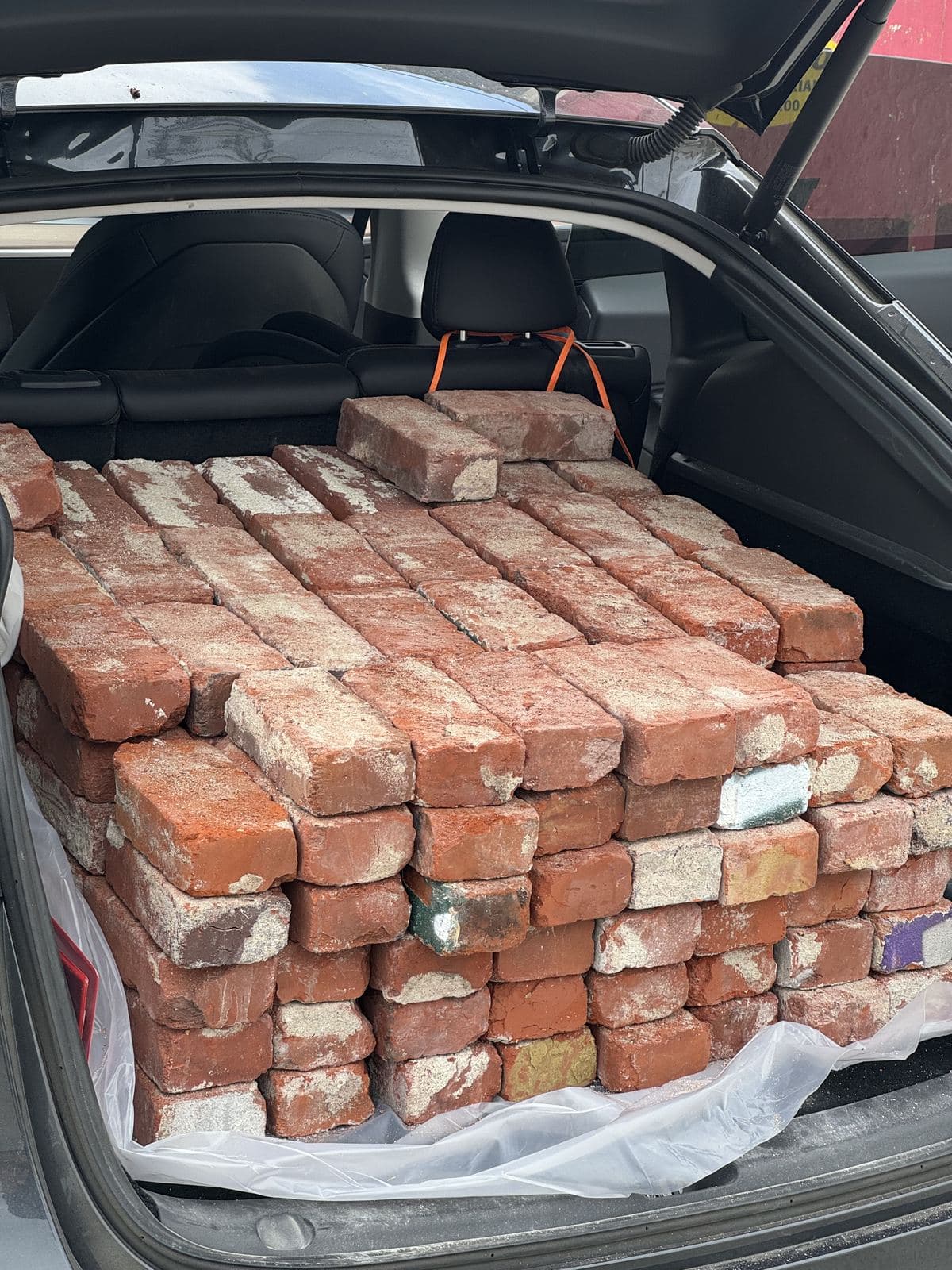
If you are considering reclaimed brick, plan for the sourcing time. New brick is on a shelf at a supply yard. Reclaimed brick has to be hunted, and you may visit a dozen yards before you find one with enough matching material for the full project.
5. Drainage: The Silent Variable
A walkway should slope 1-2% to one side. Not enough that you notice it underfoot, but enough that rain runs off cleanly instead of pooling. On a 40-foot walkway, that is roughly 5-10 inches of fall from one end to the other.
The Carlson Park walkway had been built flat. Combined with the settling soil, that meant water sat on it after every rain. Eventually it found the joints, worked them loose, and turned the path into a slipping hazard.
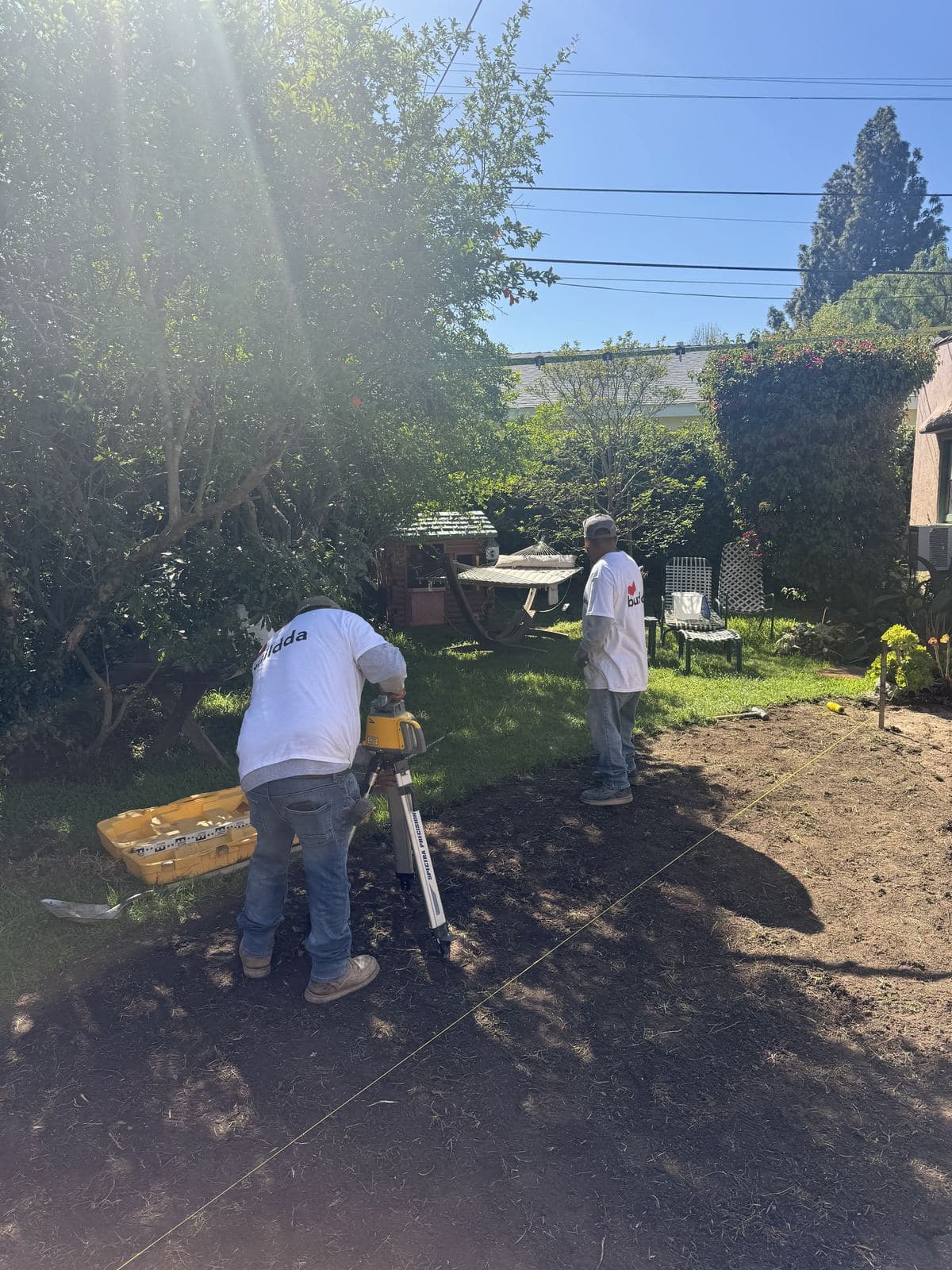
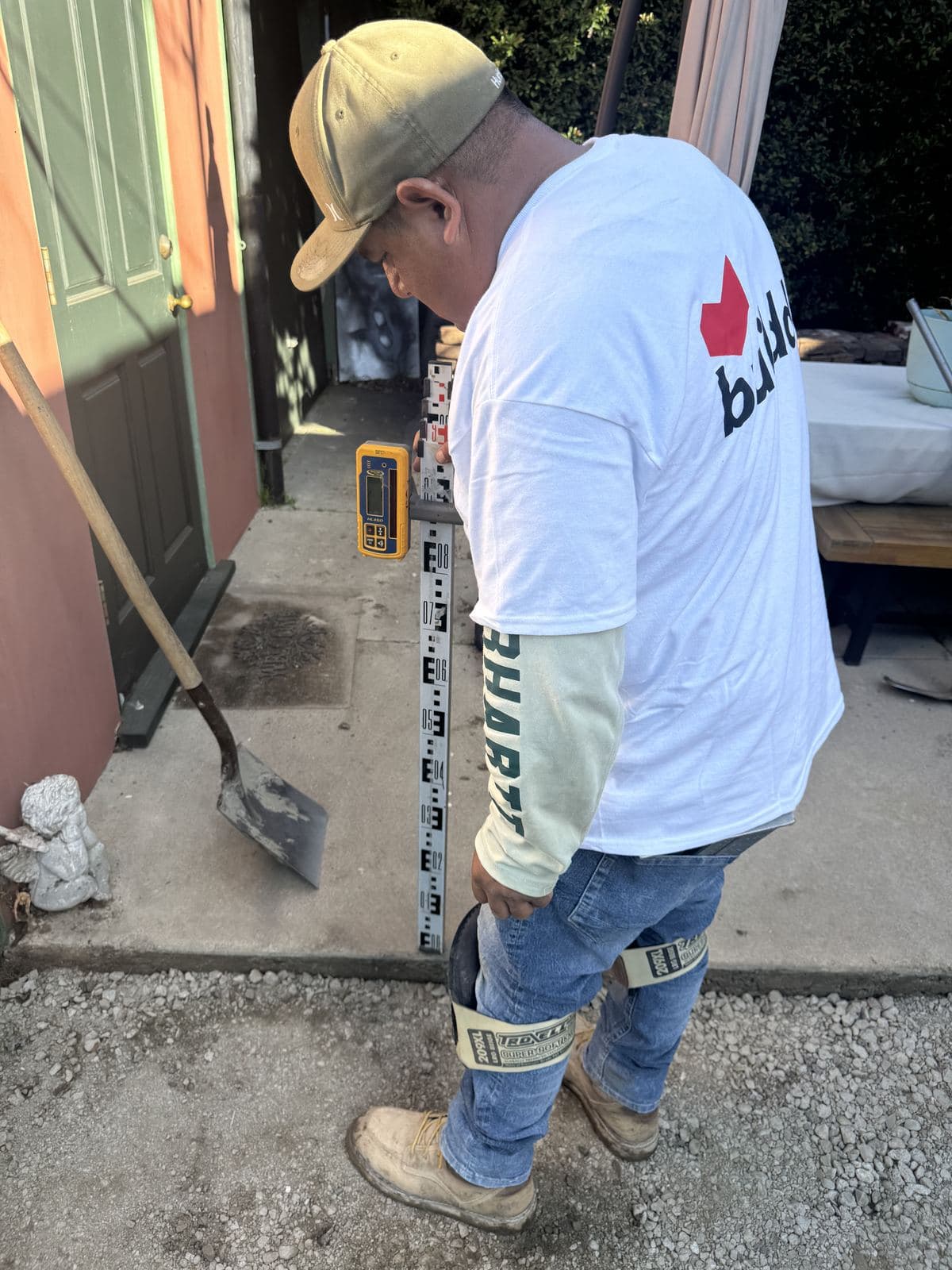
We use a rotating laser level to verify slope across the full run before any brick goes down. One person spots the laser, another confirms the height at marked stations. Miss by half an inch over 40 feet and water pools in the low spot for the next decade.
In clay soil areas, which includes most of Culver City and West LA, drainage matters more because the soil itself does not absorb water quickly. A walkway that does not shed water cleanly will heave with the wet-dry cycle of LA winters.
6. Base Prep on Disturbed Soil
Most walkway specs assume undisturbed native soil under the path. If the area has been disturbed - tree removal, recent excavation, irrigation trenching, or anything that broke up the original soil structure - you need to rebuild the substrate before you build anything on top of it.
For Carlson Park, that meant bringing in clean dirt, spreading it in 4-6 inch lifts, and compacting each lift before adding the next. This rebuilds a stable base that does not keep settling. Then the gravel base. Then the mortar bed. Then the brick.
Skipping this step is the most common cause of "the walkway looked great for two years and then started sinking."
7. Width and Dimensions
Front walkway (street to door): 4-5 feet (5 feet for two people side by side).
Side yard path: 2-3 feet.
Garden path: 18-24 inches (single file).
For ADA-compliant access (wheelchair, walker), the path needs to be 36 inches minimum with a firm, non-slip surface. Maximum slope: 1:20 (5%) without handrails, 1:12 (8.33%) with handrails.
We extended the Carlson Park walkway beyond its original footprint so that moving through the backyard was actually comfortable - no more awkward narrow path threading between plants. 300 square feet of new walkway in total, with the path widened to a comfortable 4 feet.
8. Sprinkler and Landscape Coordination
Most existing walkways were built around the irrigation that was there at the time. Replacing the walkway usually means moving sprinkler heads, re-running drip lines, and adjusting plant spacing.
We map every irrigation head before demolition, cap and reroute the lines, and confirm that the surrounding plants still get water before signing off. Skipping this step kills the surrounding landscape over the following months.
9. Permits
Walkway work in most LA-area cities does not require a permit if you are replacing within the same footprint and not changing drainage patterns. Where you typically do need one:
Connecting to public sidewalk. May require an encroachment permit from the city.
Adding retaining walls over 3 feet. Requires a building permit and engineering.
Changing drainage patterns that affect neighboring properties.
In Culver City, standard backyard walkway replacement does not require a permit. We always verify the specific scope against the city before starting.
10. The Finished Result
300 square feet of reclaimed brick. 8 days on site from demo to final sweep. Drainage that actually sheds water now, on a base that will not settle further, sourced from material that matches the home's character.
11. Frequently Asked Questions
How long does a walkway last?
Concrete: 25-50 years. Pavers: 25-50 years. Flagstone: 50+ years. Brick (with proper base): 30-50 years. DG: 3-5 years before needing refresh. Lifespan depends more on the base prep than the surface material.
Can I install a walkway over tree roots?
We do not recommend it. Roots will lift concrete and pavers over time. Either reroute the path around the root zone, or have an arborist evaluate root management before building. We have also seen homeowners install permeable surfaces (DG, gravel) over roots as a compromise where rerouting is not an option.
Can I lay new brick over an existing brick walkway?
Almost never a good idea. Whatever caused the existing walkway to fail (base failure, drainage, settling) will still be there under the new layer. The right approach is full demo, fix the base, then rebuild.
What is the right walkway material for Southern California?
It depends on the home. Concrete pavers offer a strong balance of durability, appearance, and repairability for newer homes. Brick fits older homes (1920s-1950s Spanish, Craftsman, Mediterranean). DG works for garden paths on a tight budget. Flagstone is the long-lifespan premium option for high-end landscape designs.
How long does walkway installation take?
Most walkway projects complete in 2-8 days of active work. Our Carlson Park project took 8 days because of the sourcing time for reclaimed brick and the additional base work required by the disturbed soil. A standard concrete walkway with no surprises is closer to 3 days.
Do I need to worry about the city's building code on a backyard walkway?
Less so than for front-yard or sidewalk-adjacent work. Backyard walkways generally do not have setback or material restrictions. The exception is if you are adding retaining walls or your project changes drainage patterns to a neighboring property.
Local Tip: Walkways in Culver City
Culver City has a mix of housing eras: 1920s-1940s Spanish revival in Carlson Park and surrounding neighborhoods, mid-century in others, and contemporary remodels throughout. Older homes look right with brick, flagstone, or natural stone walkways - new concrete pavers often clash with the architecture. Tree-disturbed soil is also more common in established neighborhoods where mature trees have been removed; plan for extra base work when the lot has changed over the decades.
Local Tip: Coastal Walkways
In Santa Monica, Venice, and Marina del Rey, salt air and coastal fog accelerate corrosion on metal edge restraints and fasteners. We use stainless steel or hot-dipped galvanized hardware on coastal walkway projects. Light-colored surfaces also stay cooler in direct sun, which matters more along the coast where reflected heat off concrete is amplified. Decomposed granite paths drain well in coastal soil but need more frequent replenishment because the wind erodes them faster than inland.
Get Walkway in Your Area
Professional contractors serving the Greater Los Angeles area
Popular service areas:
Also explore related services:


