


Skylights to Roof Replacement: Brentwood Case Study

Your roof might seem fine until it is not. Maybe you are planning a renovation and discover problems along the way. Maybe a storm reveals what was hidden for years. Either way, you are suddenly facing a project you did not expect.
This is the story of a recent project in Brentwood - what started as a skylight installation turned into a shingle roof replacement after heavy rain exposed three leaks. Here is how we handled it, what we learned, and what every LA homeowner should know about shingle roofs.
1. How This Project Started - and Changed
Our Brentwood client originally contacted us about installing three VELUX skylights. She wanted more natural light in her living room. We started working on the plans and engineering for the skylight penetrations.
Then a week of heavy rain hit Los Angeles.
The client called us - she had discovered three active leaks in the roof. Water was coming through in different areas, which told us this was not a single flashing failure but a broader roof problem.
We went back up to inspect. The shingles were past their lifespan - widespread granule loss, cracking, and the decking had soft spots where water had been seeping through. The leaks from the rainstorm were symptoms of a roof that was failing.
This changed the scope of the project. Instead of just skylights, we replanned to replace the affected roof sections - the areas where the leaks originated and the surrounding shingles that were also deteriorating. We also needed to make sure the new skylight penetrations would be integrated into solid, new roofing material rather than the failing old shingles.

What Are Roof Sections?
A roof is not one flat surface. It is made up of sections - called "planes" or "facets" - separated by ridges, valleys, and hips. Each section can be in different condition depending on its sun exposure, slope, and age. South and west-facing sections deteriorate faster in Southern California because they take the most UV.
In some cases, you can replace only the damaged sections rather than the entire roof. This depends on whether the remaining sections are still in good condition and whether the new shingles can be properly tied into the existing ones. We assess this on a case-by-case basis during inspection.
2. The Permit Process
In Los Angeles, any roof replacement needs a permit - even a partial section replacement.
For a standard shingle re-roof with no structural changes, you qualify for an Express Permit through LADBS. No plan check required. Processing time is usually same-day to two days through the PermitLA online system.
For this Brentwood project, we needed a full plan check because the three skylight openings are structural modifications - you are cutting through the roof deck and framing new openings. That meant submitting engineered plans, waiting for approval, and scheduling multiple inspections.
During that wait, the protective tarps we installed kept the client dry. This is something we always do when there is a gap between discovering a problem and starting work.
Culver City homeowners: the Building Safety Division handles roofing permits at City Hall, 2nd floor. Phone: (310) 253-5800. Standard re-roofs are straightforward.
3. Choosing the Right Shingle
For this Brentwood home, the client already had CertainTeed Presidential shingles on the rest of the roof. Since we were replacing only the affected sections, we needed to match the existing product so the new and old sections blend seamlessly. CertainTeed Presidential is a premium architectural shingle with a thick, layered profile that mimics the look of natural slate. It meets California's Title 24 cool roof requirements.
When you are replacing a roof section rather than the entire roof, matching the existing shingle is critical. Different brands and product lines have different profiles, thicknesses, and color tones. Even shingles that look similar in a catalog can look noticeably different once installed next to aged shingles. We always identify the existing product before ordering materials.
The three major shingle brands we work with:
GAF Timberline HDZ: The most widely installed shingle in America. About 40% national market share. 130 mph wind warranty through their WindProven program. Wide color selection.
Owens Corning Duration: Strong impact resistance. The FLEX line carries a Class 4 hail rating. Good choice for areas with severe weather exposure.
CertainTeed Landmark PRO: Premium appearance with strong algae resistance. The Presidential line (what we used in Brentwood) sits above Landmark as their top-tier product.
All three brands offer Title 24 compliant cool roof versions with CRRC-rated reflective granules.
From My Experience: Homeowners often ask which brand is best. All three perform well in our climate. The real difference is the installer, not the shingle. Proper installation technique, nail placement, and flashing details matter more than the brand name on the wrapper.

4. Title 24 Cool Roof Requirements
This is something most homeowners do not know about until their contractor tells them.
The City of Los Angeles requires cool roof materials with a Solar Reflectance Index (SRI) of 16 or higher for any re-roof replacing more than 50% of the roof area. The material must be CRRC-rated (Cool Roof Rating Council tested).
What this means for you: standard shingles do NOT meet cool roof requirements. You need a specifically rated cool roof shingle - GAF Timberline HDZ RS, Owens Corning Duration COOL, or CertainTeed Landmark Solaris.
Important: Culver City (Climate Zone 8) does not have the same requirement under state Title 24. But if your property is within the City of LA boundaries, it applies. We always verify jurisdiction before specifying materials.
5. Tear-Off Day
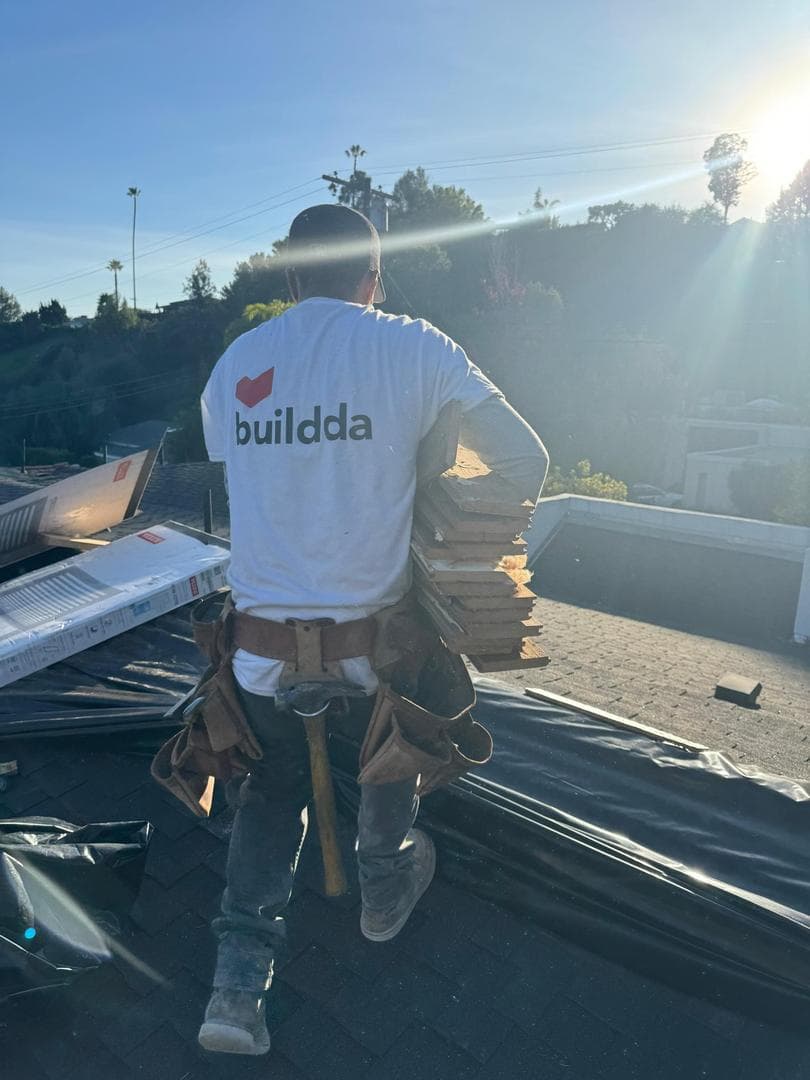
Tear-off is the most dramatic day of a roof replacement. Our crew starts at the ridge and works down, stripping every old shingle. We inspect the deck as we go - looking for soft wood, water damage, and failed flashing.
After the shingles come off, we sweep the entire deck with a magnetic nail remover. Every single old nail must come out. Leftover nails can puncture the new underlayment and cause leaks down the road. This step takes time but it is non-negotiable.


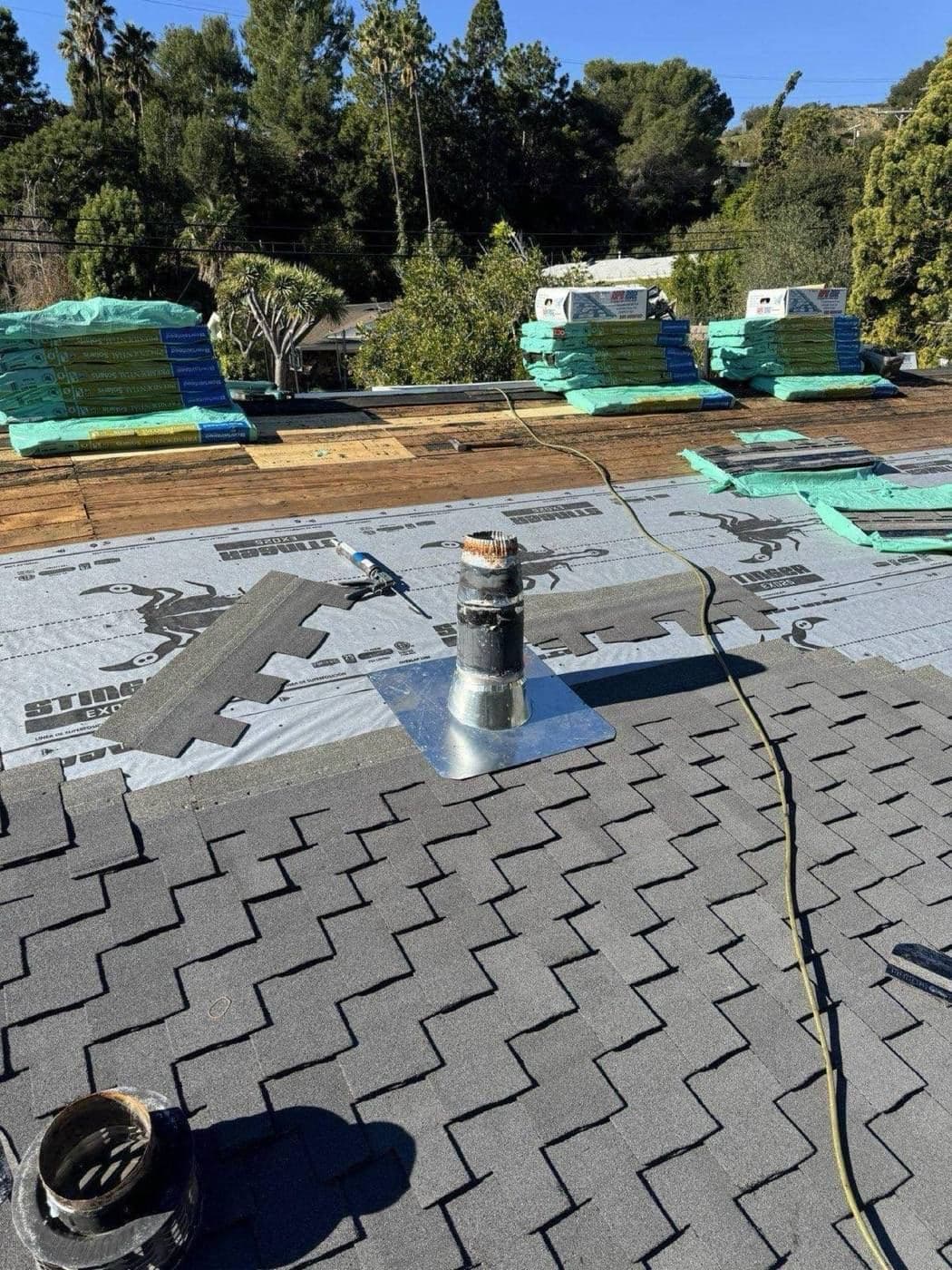
Once the deck is clean and any damaged sheathing is replaced, we install synthetic underlayment across the entire surface and stage the new shingle bundles.
6. VELUX Skylight Installation
If you are already replacing your roof, it is the ideal time to add skylights. The roof is open, the crew is there, and the skylight penetrations get integrated into the new roof system from day one.
Our client wanted three VELUX skylights to flood her living room with natural light. We built wood curb frames at the precise locations, then cut through the deck and ceiling to create the openings. Each opening must be precisely framed and flashed to prevent water intrusion - this is the most critical step of skylight installation.


Then comes the most precise part of the job - installing shingles around each skylight. The flashing kit must integrate seamlessly with both the skylight frame and the surrounding shingles to create a watertight seal.

Watch our crew in action on this project:
7. The Finished Roof
After the underlayment, flashing, shingles, ridge caps, and ventilation are all installed, we do a full walkthrough with the homeowner and schedule the final inspection.
What started as a skylight project became a complete transformation. The client now has a new roof with a manufacturer warranty that will protect her home for years to come, plus three skylights that bring natural light into her living room exactly as she originally envisioned.
8. Timeline
Most residential shingle roof replacements complete in 2-4 days of active work.
Day 1: Tear-off, deck inspection, repair any damaged sheathing
Day 2: Underlayment, flashing, begin shingle installation
Day 3-4: Complete shingles, ridge caps, cleanup, final inspection
Our Brentwood project took longer because of the three skylight installations, but a standard re-roof without skylights is typically done within a week of starting.
9. Frequently Asked Questions
Do I need a permit for a shingle roof replacement in LA?
Yes. Even a straightforward tear-off-and-replace needs a permit. The Express Permit process makes it fast - often same-day. Working without a permit is a code violation and can create problems when you sell your home.
Can I replace just part of my roof?
Yes, in some cases. If only certain sections are damaged and the remaining sections are still in good condition, a partial replacement can work. The key is whether the new shingles can be properly tied into the existing ones without creating a weak point. We assess this during inspection.
Can I put new shingles over old ones?
California allows one layer over existing shingles if the deck is sound. However, we recommend tear-off because it lets us inspect the deck, and produces a longer-lasting installation.
How do I know if I need cool roof shingles?
If your property is within the City of Los Angeles and you are replacing more than 50% of the roof, cool roof shingles are required. Culver City and unincorporated LA County have different rules. We verify jurisdiction for every job.
Is it worth adding skylights during a roof replacement?
If you have been thinking about skylights, a roof replacement is the most cost-effective time to add them. The roof is already open and the crew is already there. Installing skylights separately later means cutting into a finished roof.
What happens if it rains before my roof is finished?
We install synthetic underlayment as quickly as possible after tear-off. This waterproof membrane protects the deck even before shingles go on. If rain is in the forecast, we can also cover exposed areas with tarps overnight. We never leave a home exposed.
Local Tip: Roofing in Culver City
Culver City Building Safety Division processes roofing permits efficiently. Standard re-roofs are straightforward. If your home is near Baldwin Hills, check whether your property falls under LA City or Culver City jurisdiction - the cool roof requirements differ. Many Culver City homes from the 1940s-1960s are on their second or third roof and may have original skip sheathing that needs replacement with solid plywood during a re-roof.
Local Tip: Roofing Near the Coast
Homes in Santa Monica, Venice, and Marina del Rey face salt air corrosion on metal flashing and fasteners. We use stainless steel or hot-dipped galvanized fasteners for coastal jobs. Wind exposure is also higher near the coast, so proper nail patterns and adhesive strips on shingles matter more here than inland.
Get Roofing in Your Area
Professional contractors serving the Greater Los Angeles area
Popular service areas:
Also explore related services:


