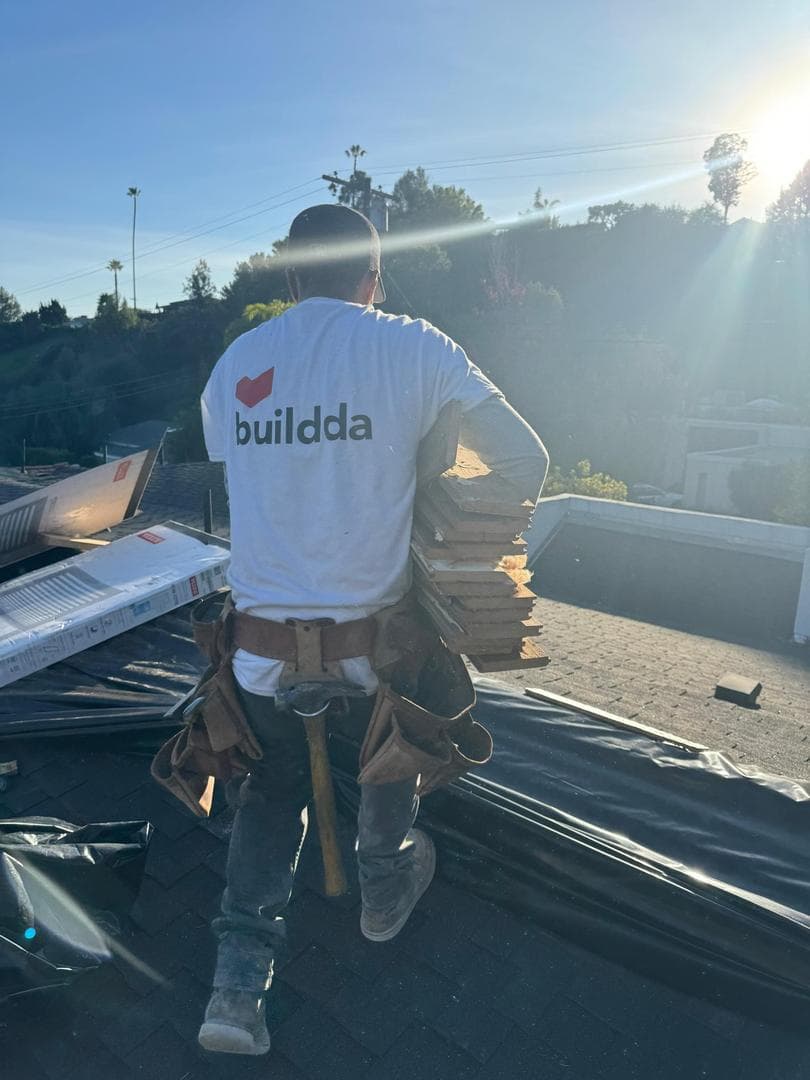
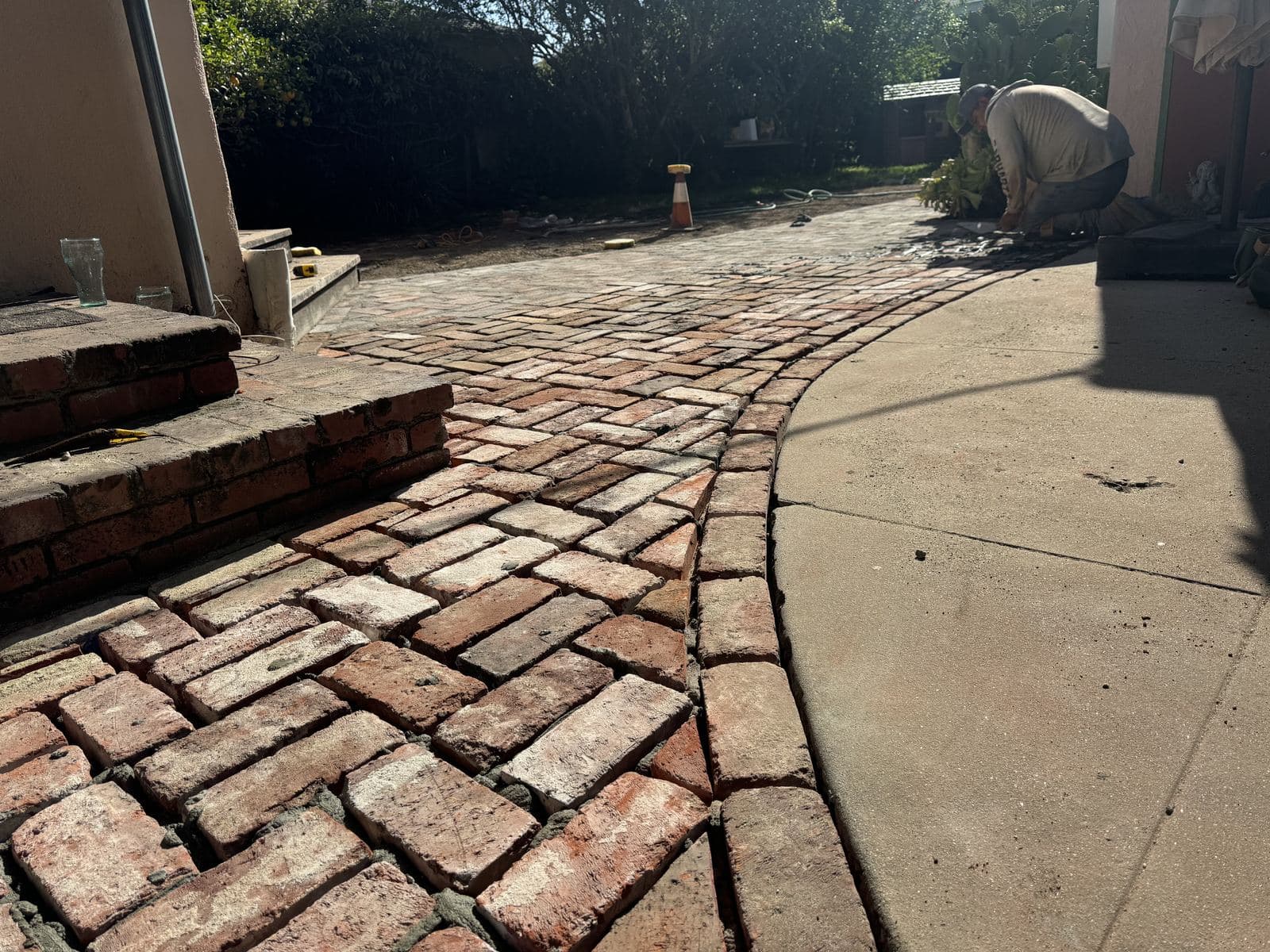
A Carlson Park homeowner needed a failing brick walkway rebuilt without losing the backyard's rusty, one-of-a-kind character. We sourced reclaimed brick across 10-15 salvage yards, fixed the drainage with a graded organic slope, rebuilt the base after years of ground settling, relocated sprinklers, and extended the walkway by 300 sqft. 8 days on site.
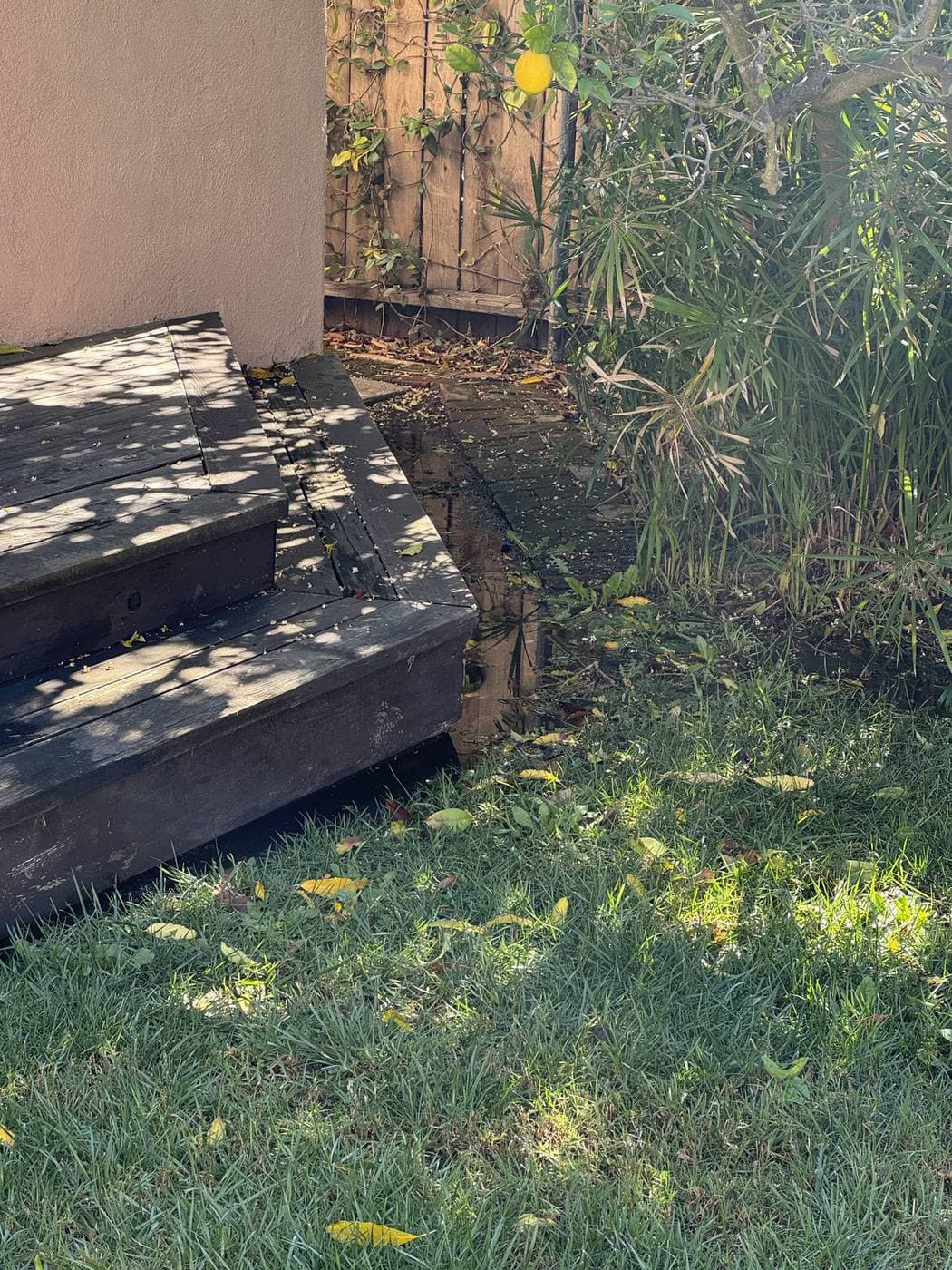
The homeowner in Carlson Park called us about a backyard brick walkway that was falling apart. Every rainy season water pooled on it - the old path had no drainage plan, the base had failed, and years of settling had turned a beautiful old walkway into a slipping hazard. The whole backyard had a one-of-a-kind rusty, aged, organic character that the homeowner loved. Our job was to fix the function without losing that look.
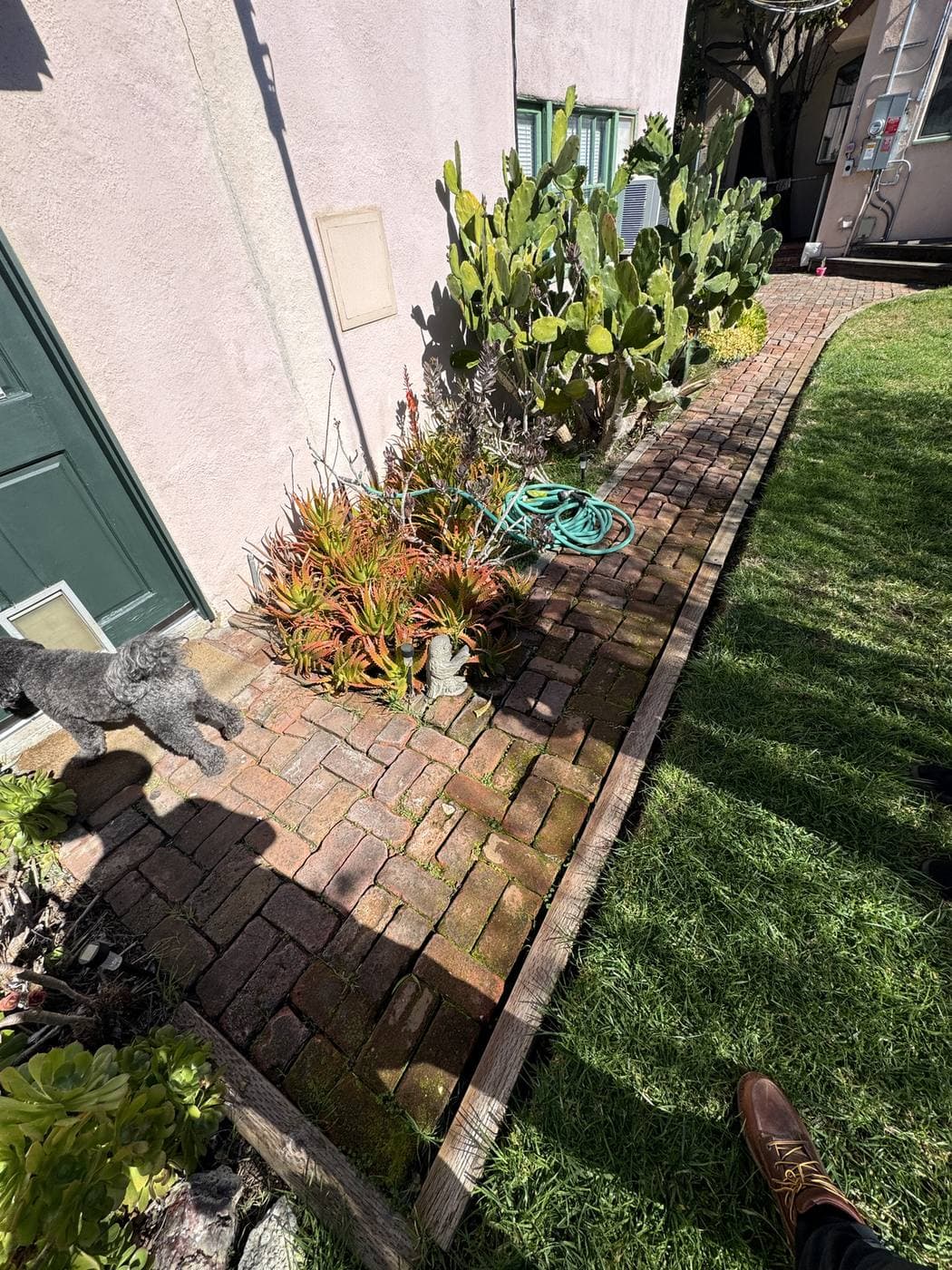
The starting point. The existing brick path had been slipping for years - the base had failed, bricks had shifted, and every rainy season water stood on it. But the rusty, aged character was exactly what the homeowner loved. Our job was to rebuild the function without losing that look.
The first problem was the brick itself. The original bricks were weathered, mismatched, and decades old - the exact look that gave the backyard its character. We refused to use new brick that would stick out. Finding enough matching reclaimed brick in that specific rusty tone turned into a real hunt - we drove through 10-15 salvage and supply yards looking for the right batch. It took time, but we found bricks that blended perfectly with the original.
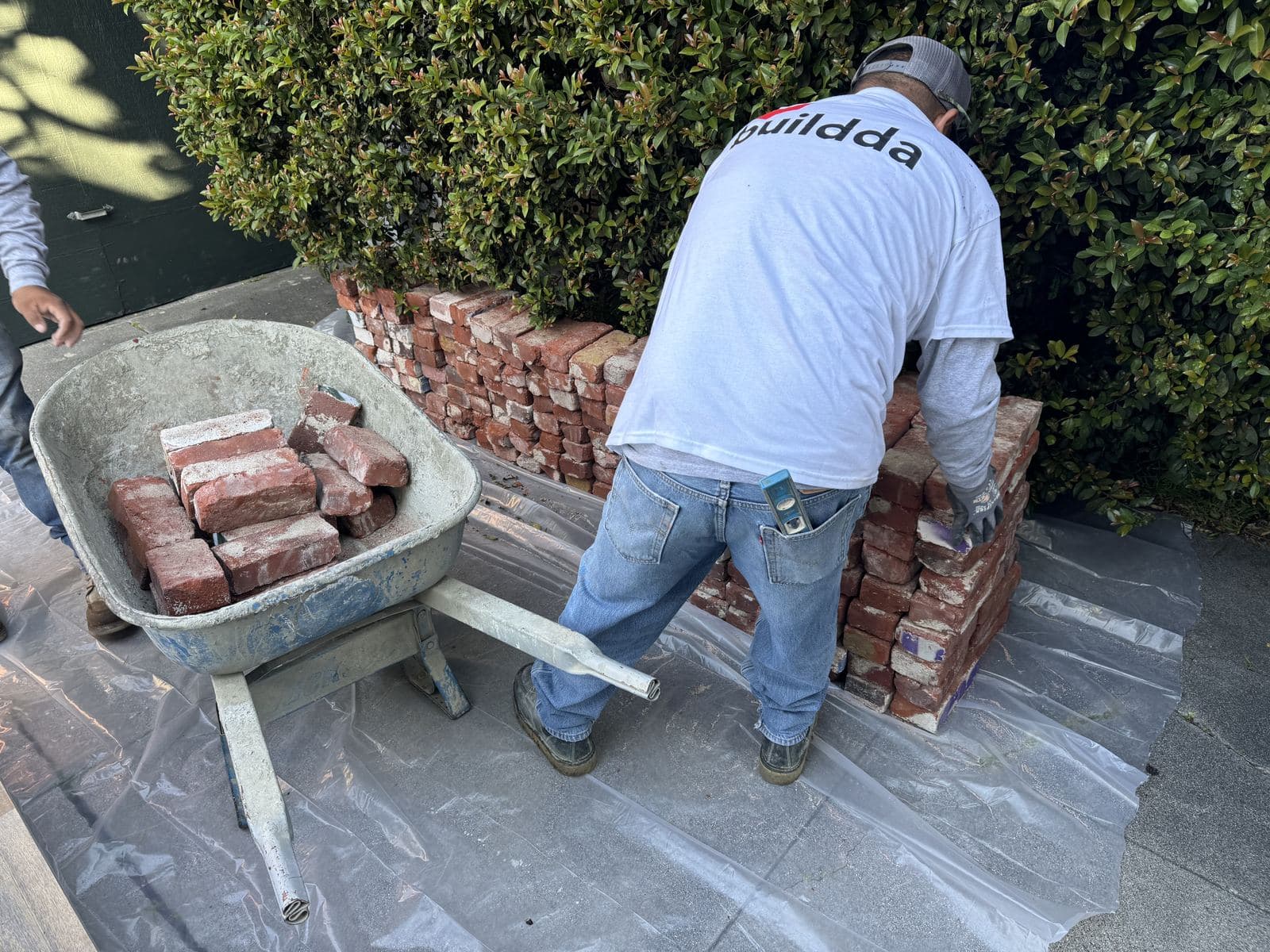
Demo in progress. We pulled up the failing walkway carefully and stacked the old bricks. Some were reusable, but we needed far more matching brick than the existing supply could give us.
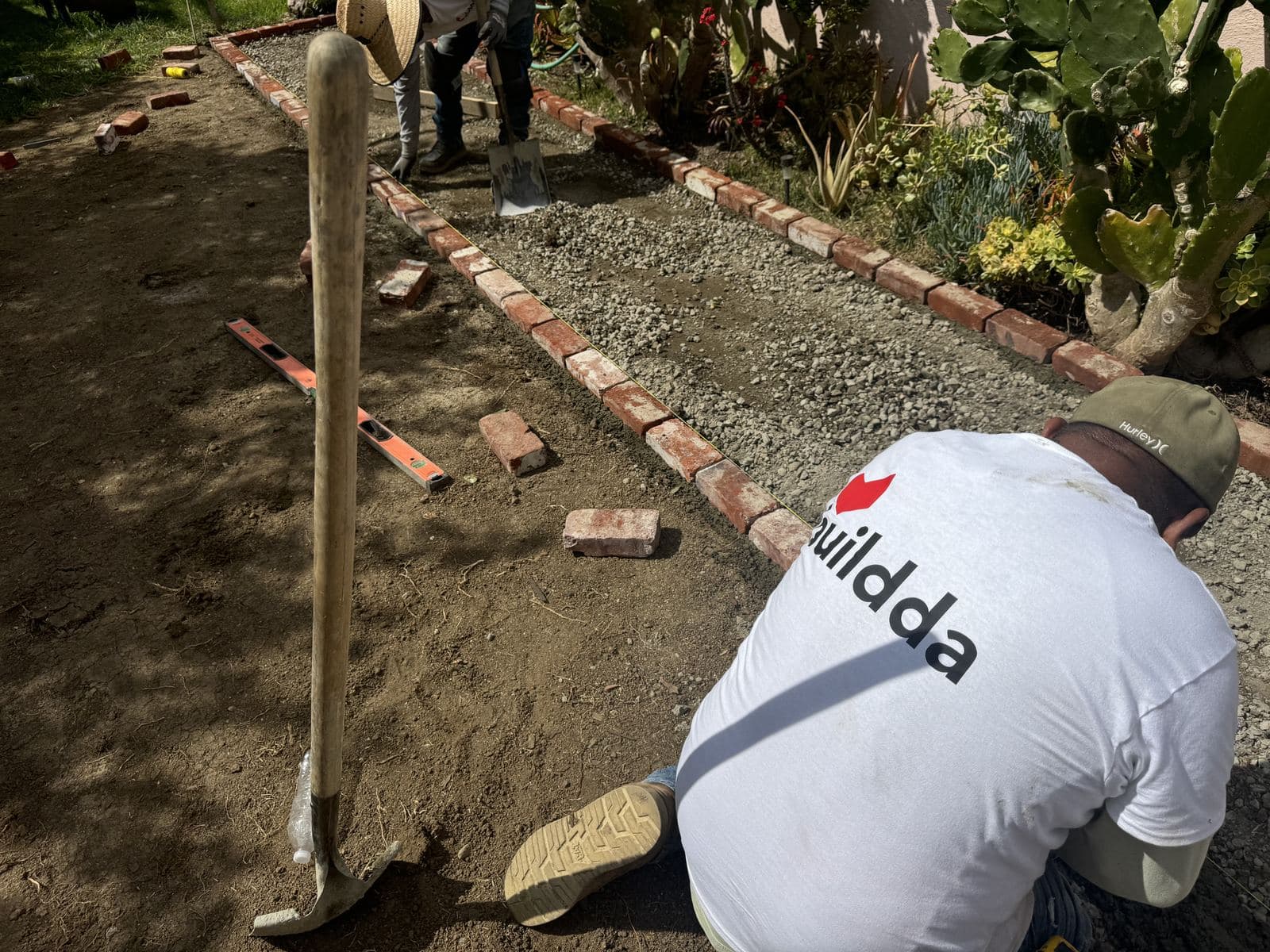
Before we could lay a single brick, we had to fix what was underneath. A tree had been removed from that area years earlier, and the ground had been slowly settling as the old root mass decomposed. We brought in clean dirt, spread it in lifts, and compacted each layer so the walkway would sit on solid ground that would not sink in a year.
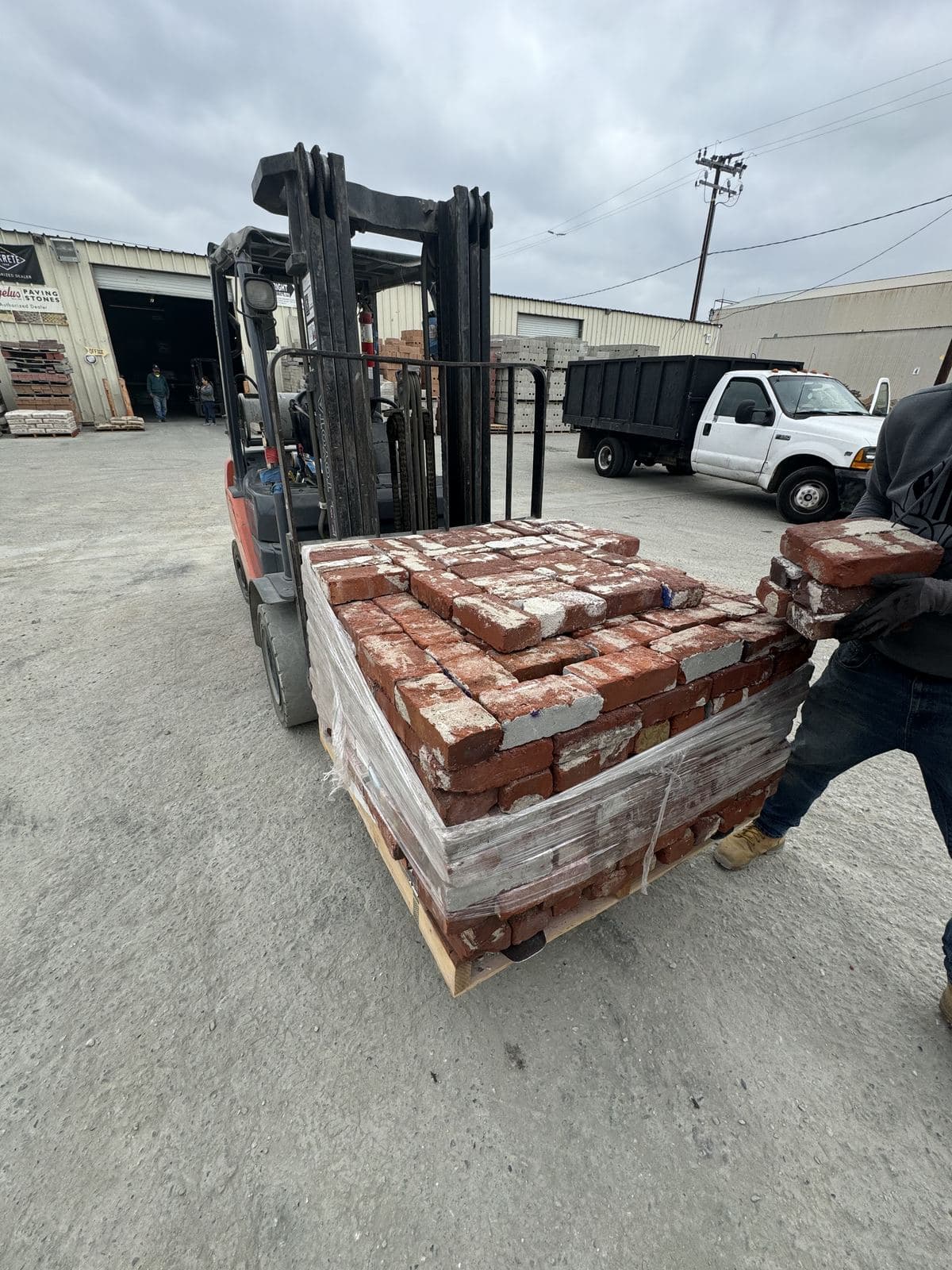
Forklift loading a pallet of reclaimed brick at a salvage yard. Finding the right rusty-toned brick to match a decades-old walkway meant visiting 10-15 yards across the LA area. New brick would have looked wrong next to the original.
We relocated sprinkler heads and adjusted the surrounding landscaping so the new walkway could follow a functional path without fighting the existing plants. Every head had to be mapped, capped, and re-run so irrigation still reached the plants after the walkway went in.
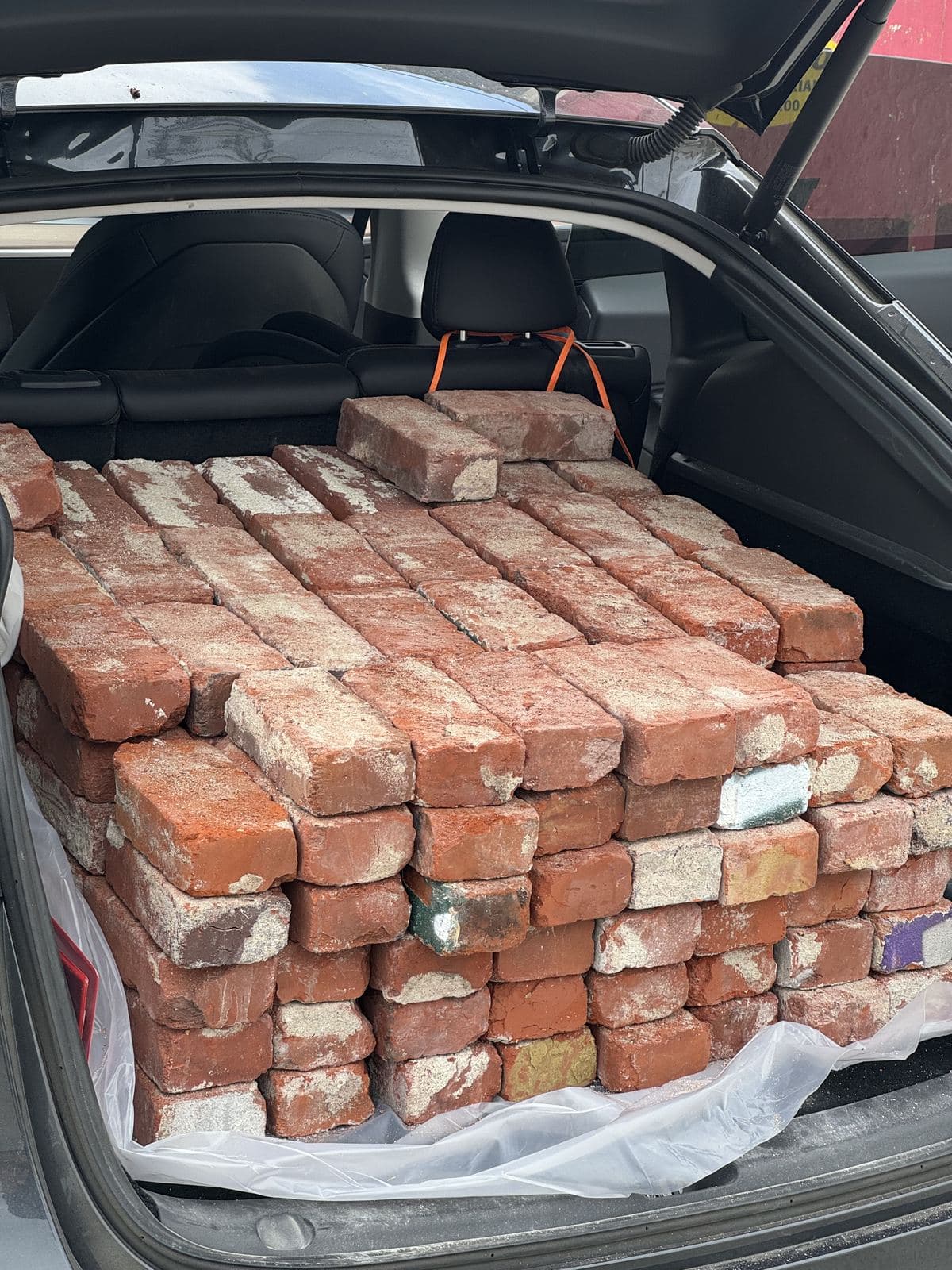
When you find the right batch, you pack them however you can. Model X trunk floor-to-roof in reclaimed brick, protective plastic underneath. The hunt was the hard part - getting them home was the easy part.
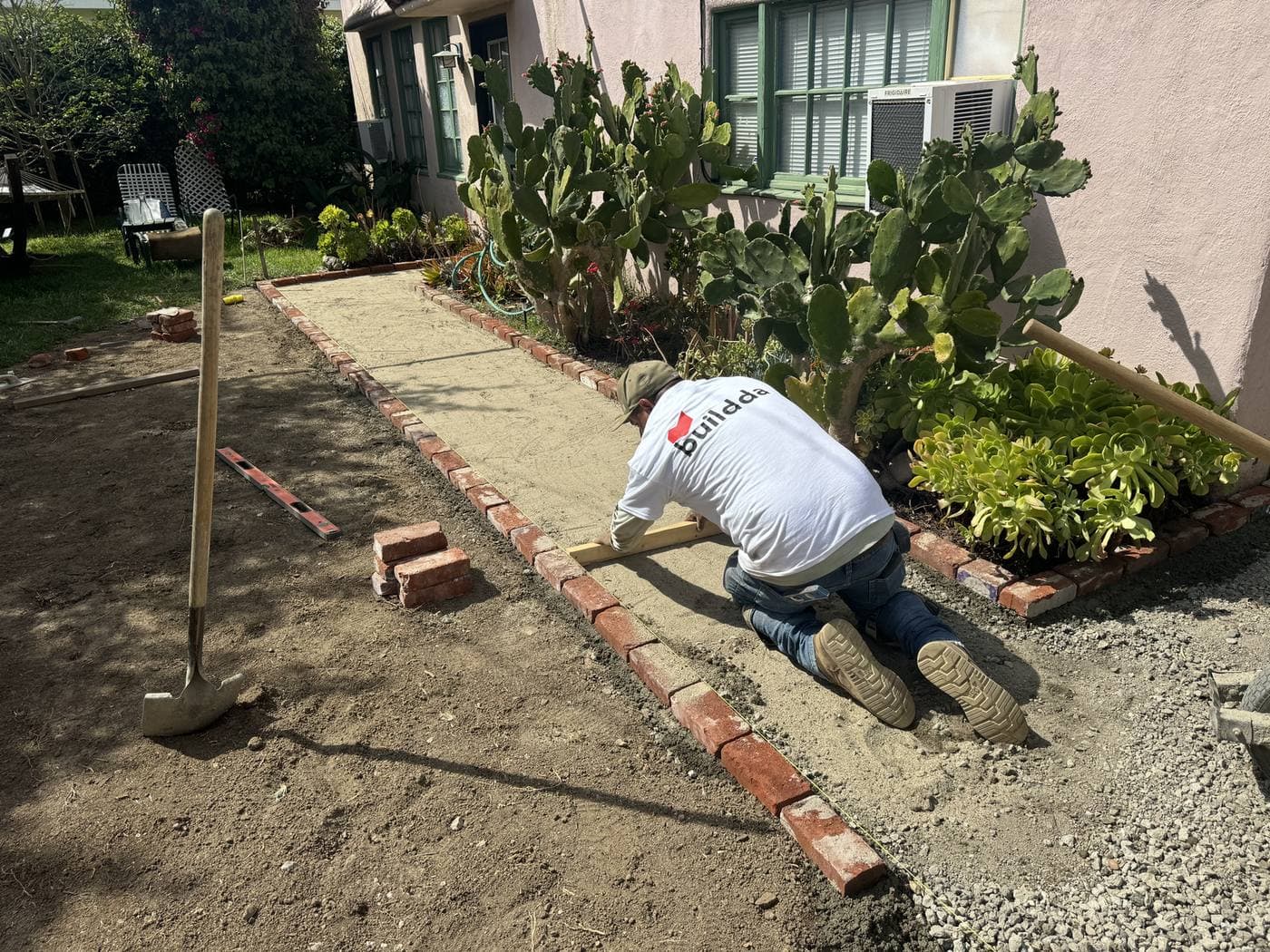
The drainage fix was the centerpiece. Instead of the flat, failing grade we started with, we designed an organic slope - nothing you would notice walking on it, but enough that rain now runs off instead of pooling. We used a rotating laser level to check the grade across the whole run before any brick went down. Once the slope was right, we screeded a mortar bed, snapped string lines for alignment, and started laying.
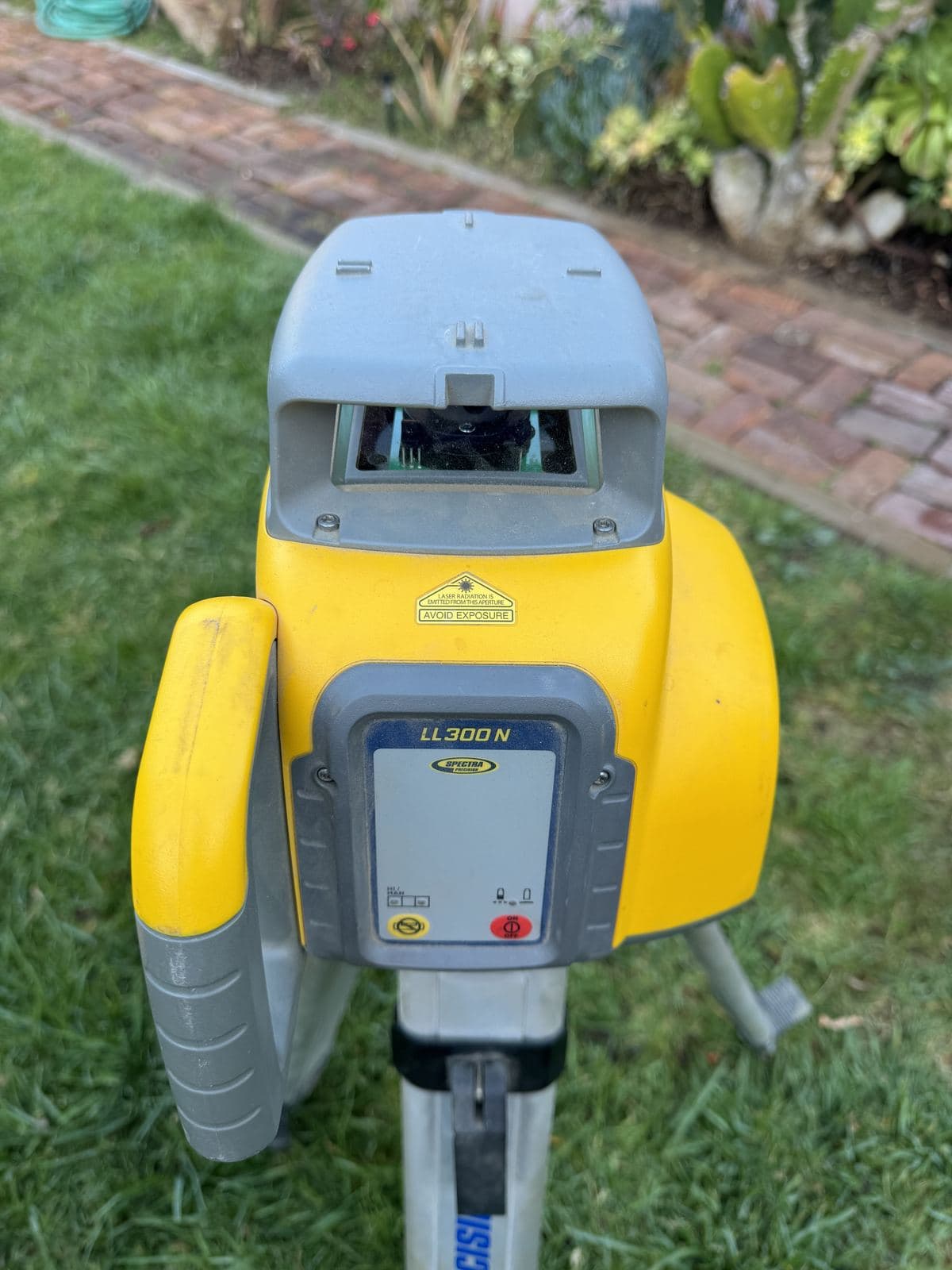
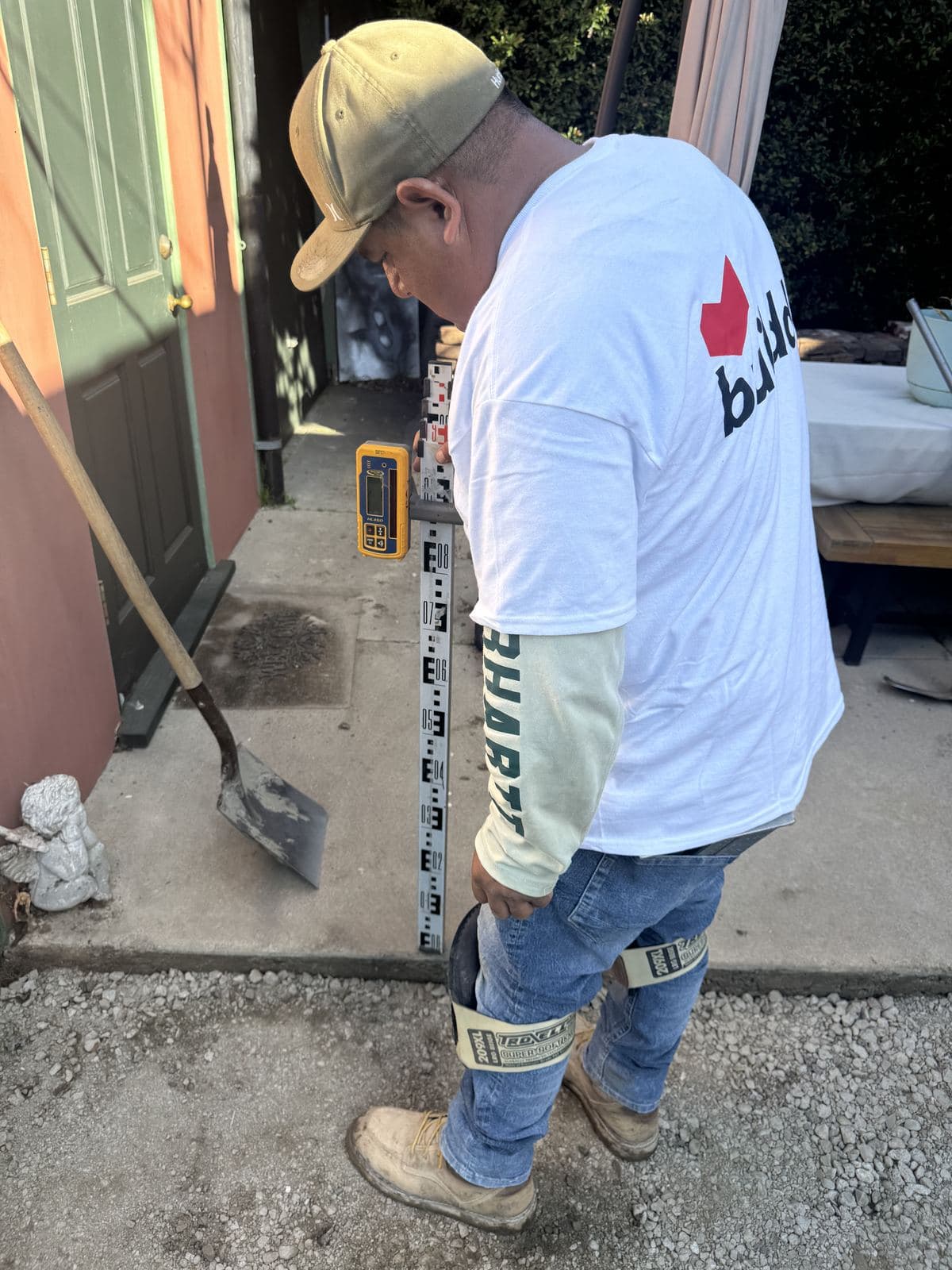
Our rotating laser level set up over the prepped path. We use this to verify the drainage slope across the full 300 sqft run - every brick has to sit on a grade that sheds water cleanly without being obvious underfoot.
We extended the walkway beyond its original footprint so walking through the yard is actually comfortable now - no more awkward narrow path. 300 square feet of reclaimed brick, laid tight, grouted, and finished to match the original aesthetic. Eight days on site from demo to final sweep.
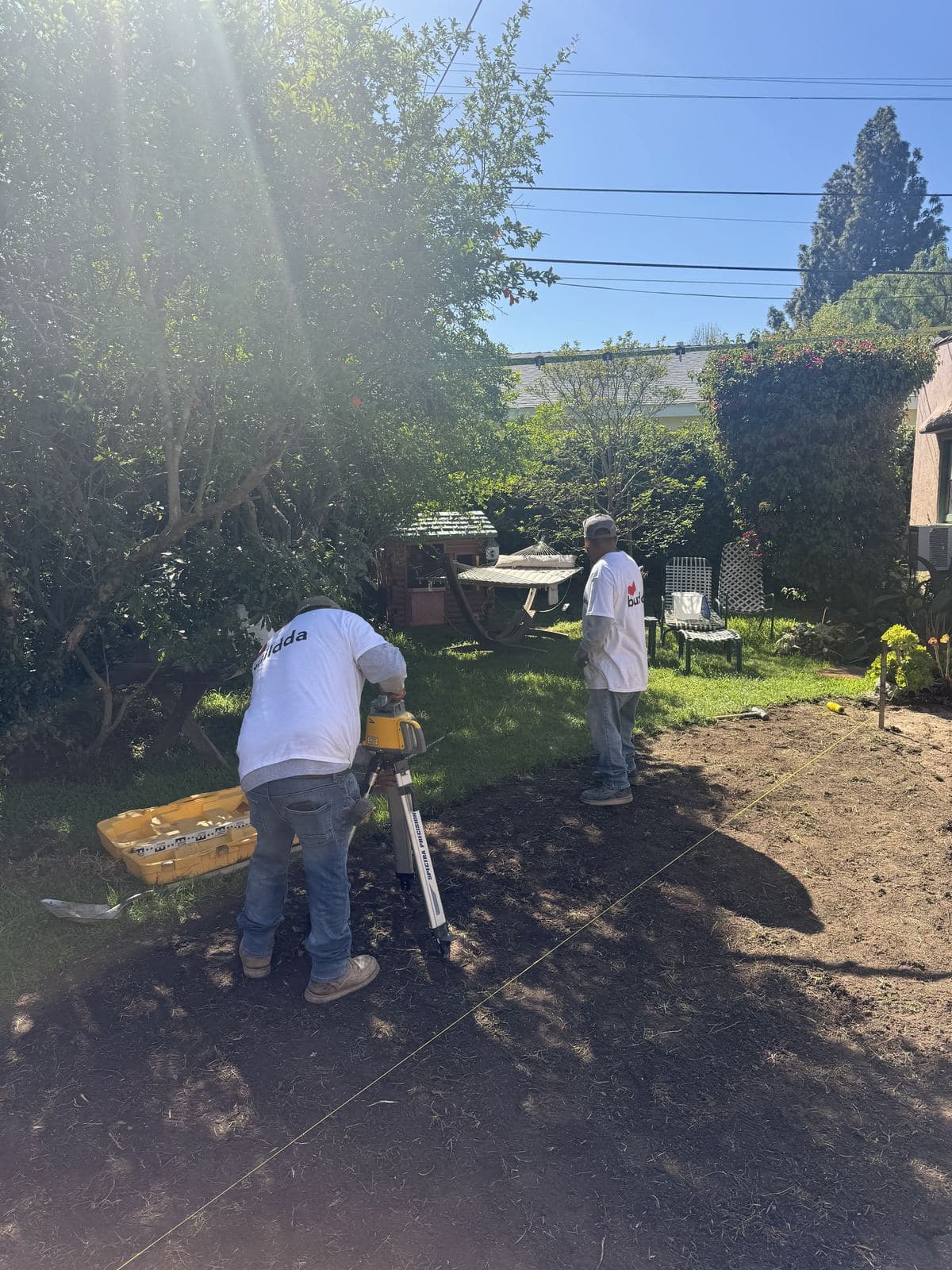
Two of our crew checking the grade together across the prepared base. Teamwork matters here - one spots the laser, one confirms the height at each station. Miss by half an inch and water pools.
The finished walkway looks like it has always been there. That was the goal - not a brand-new walkway, but the backyard the homeowner already loved, working the way it should.
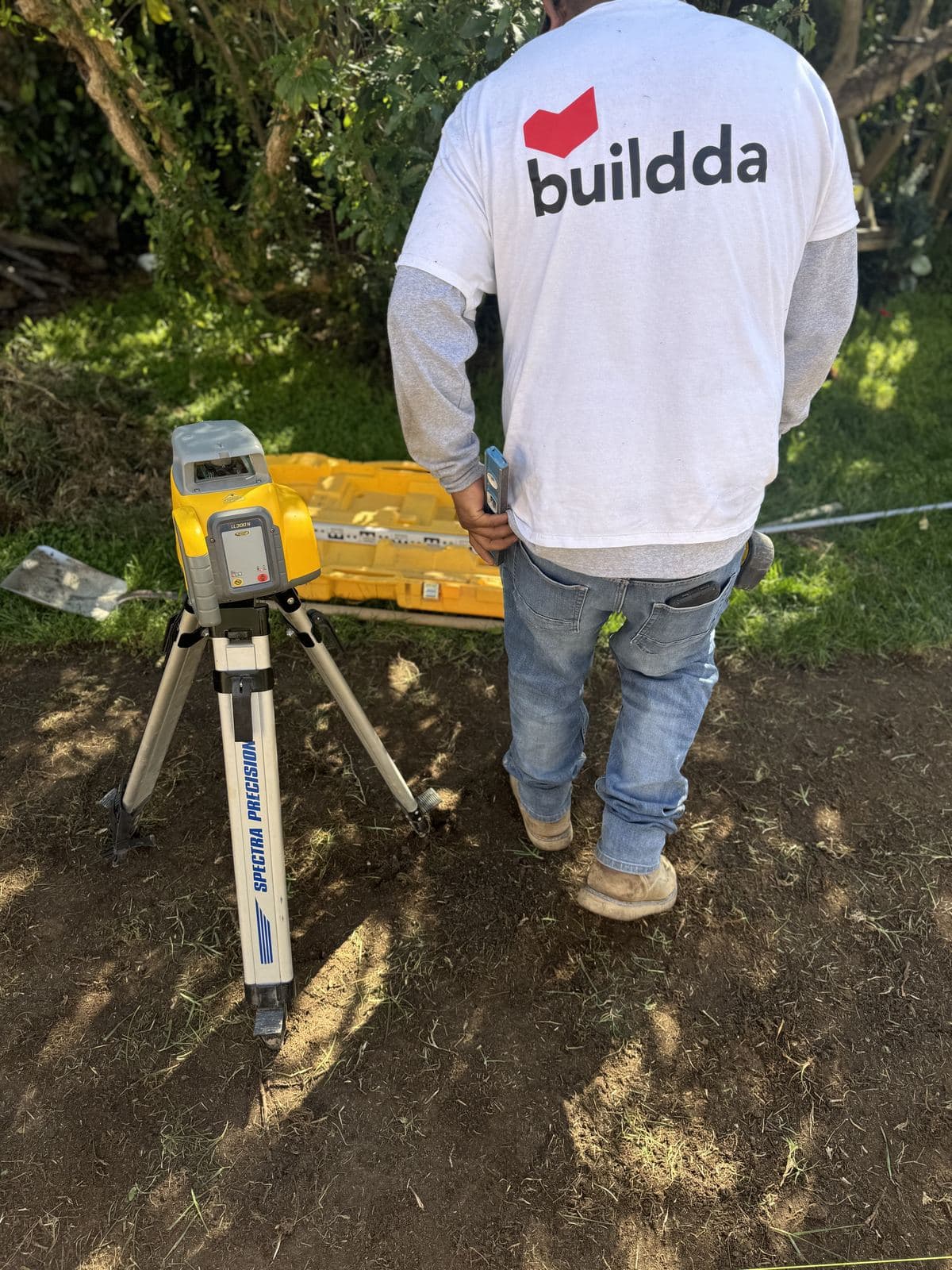
Getting the grade right is not guesswork. A laser level, a methodical check across the run, and notes kept on every high and low point until the slope is consistent from end to end.
Moving reclaimed brick into the staging area. We keep the bricks close to the work so installation flows without interruption - pick, lay, set, repeat.
Side-yard access was tight, so every load of brick and mortar had to come through the narrow passage between the house and the fence. Small yards like this one demand extra staging time but the end result fits the scale of the home.
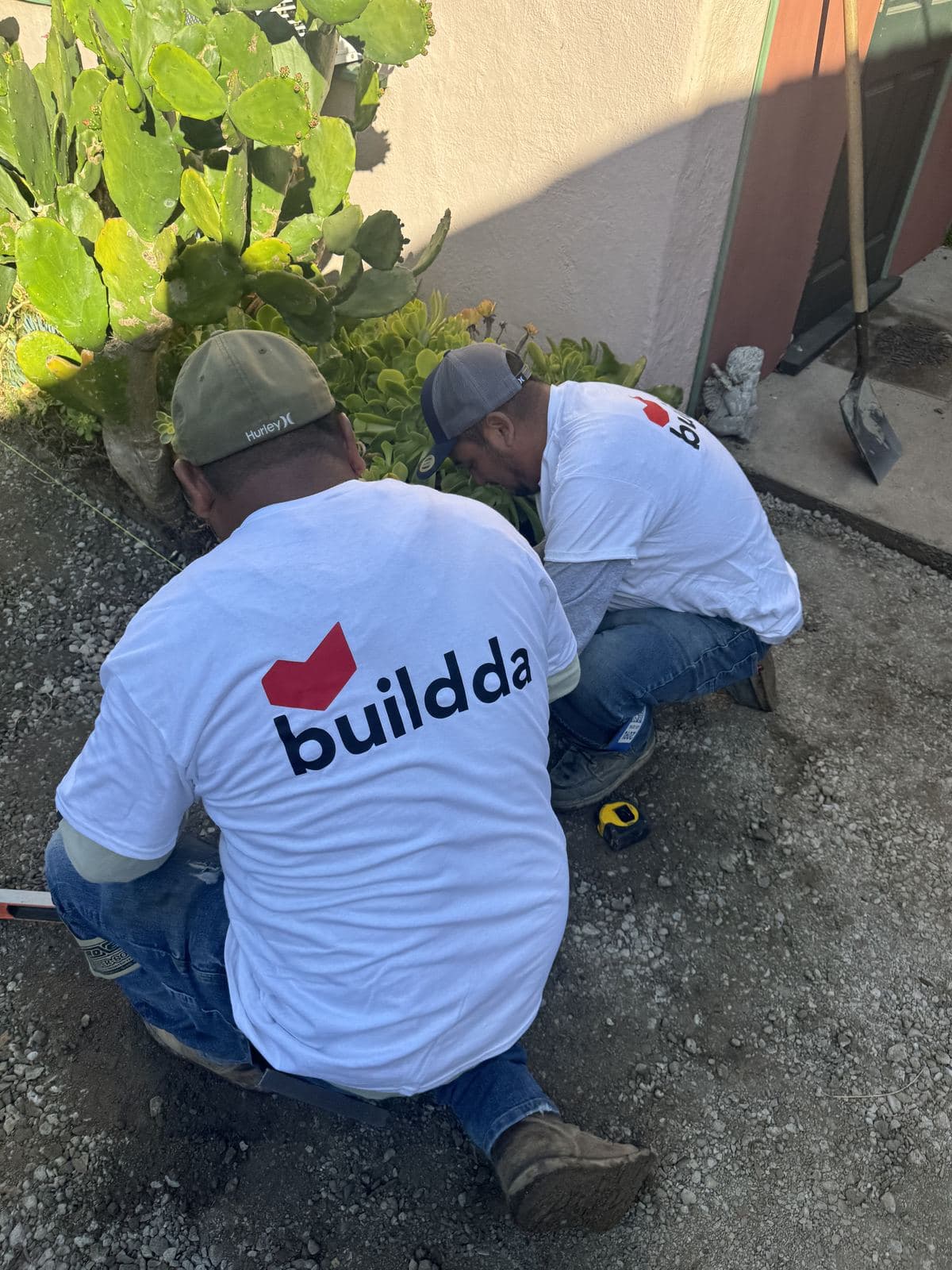
Relocating sprinkler heads around the cactus bed. The original irrigation was under the walkway path - we capped, re-ran, and tested each head so the landscape still gets water after the bricks go in.
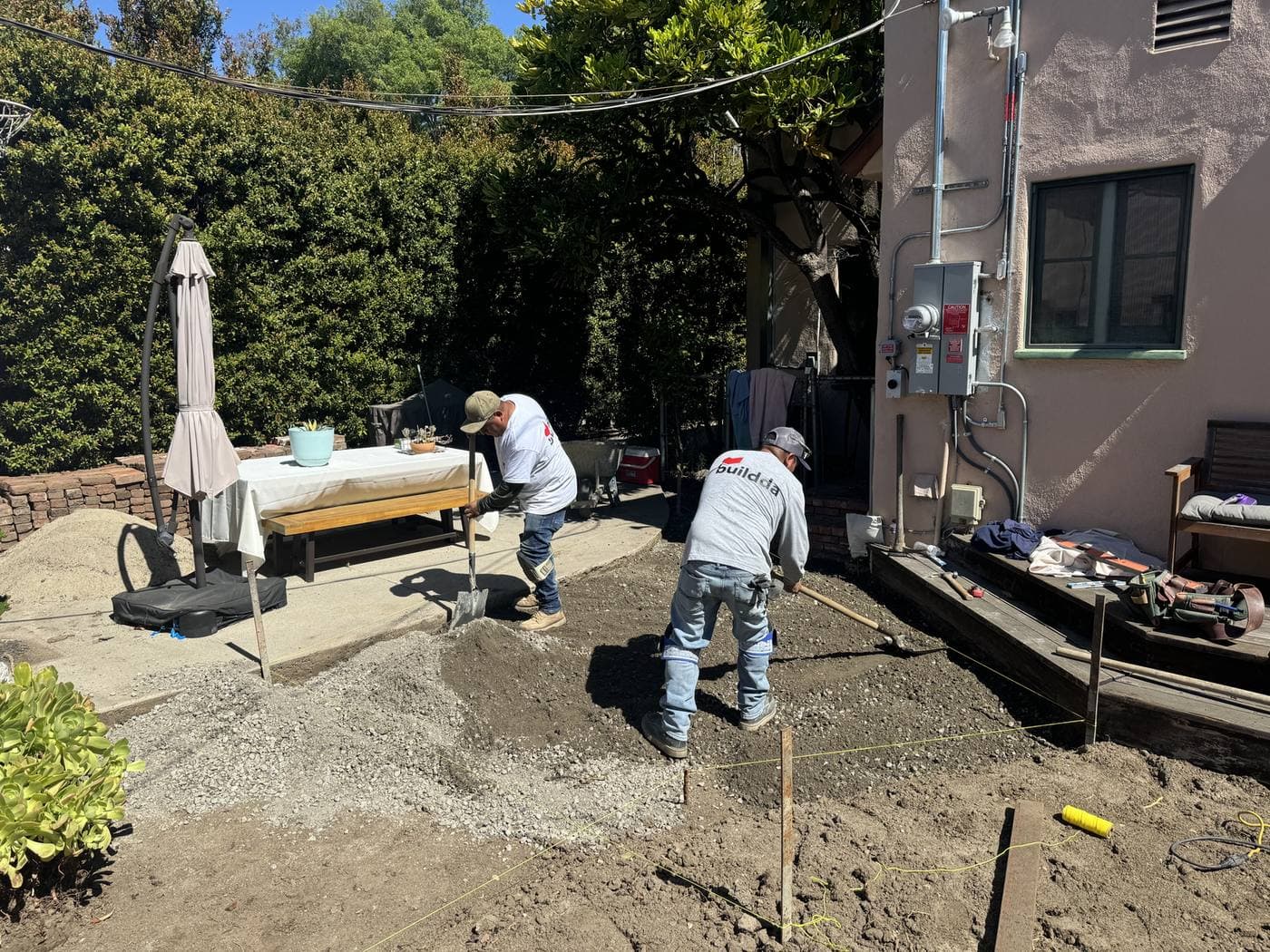
Raking the sub-base smooth before mortar goes down. The underlying ground had been settling for years because a tree had been removed from that spot and the root mass decomposed over time. We added clean dirt and compacted in lifts before rebuilding the base.
Mason strings stretched above the freshly screeded base. These guide every brick to the right height and alignment so the walkway reads straight even where the path follows a curve.
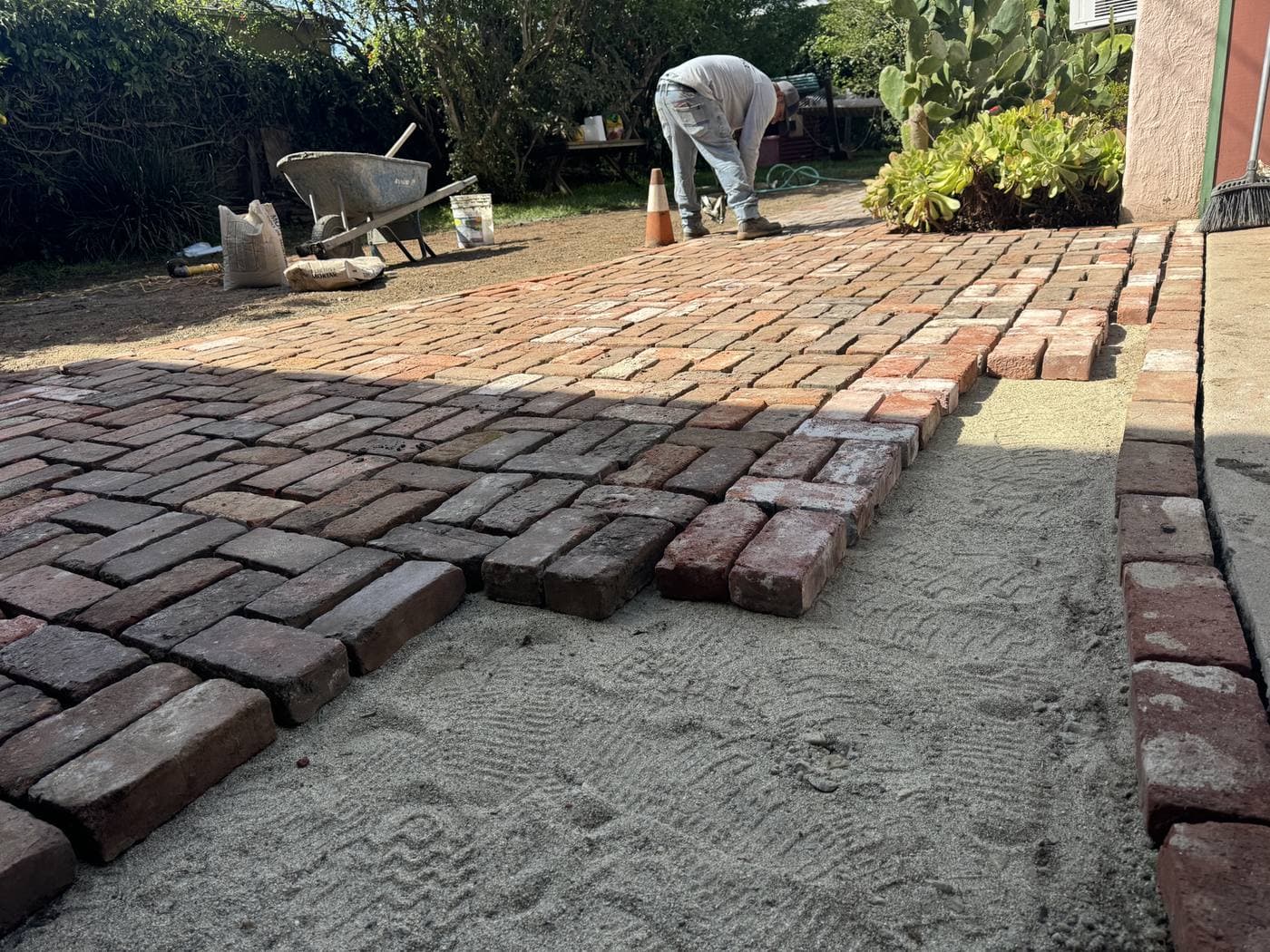
Installation in progress. Each brick is set, tapped level, checked against the strings, and spaced consistently. Reclaimed brick has slight variation - that is part of what makes the finished path look authentic rather than manufactured.
Working the pattern out. With reclaimed brick you sort as you go - color variation, size variation, small chips - and place each one where it serves the whole path. Slow work, but the result is worth it.
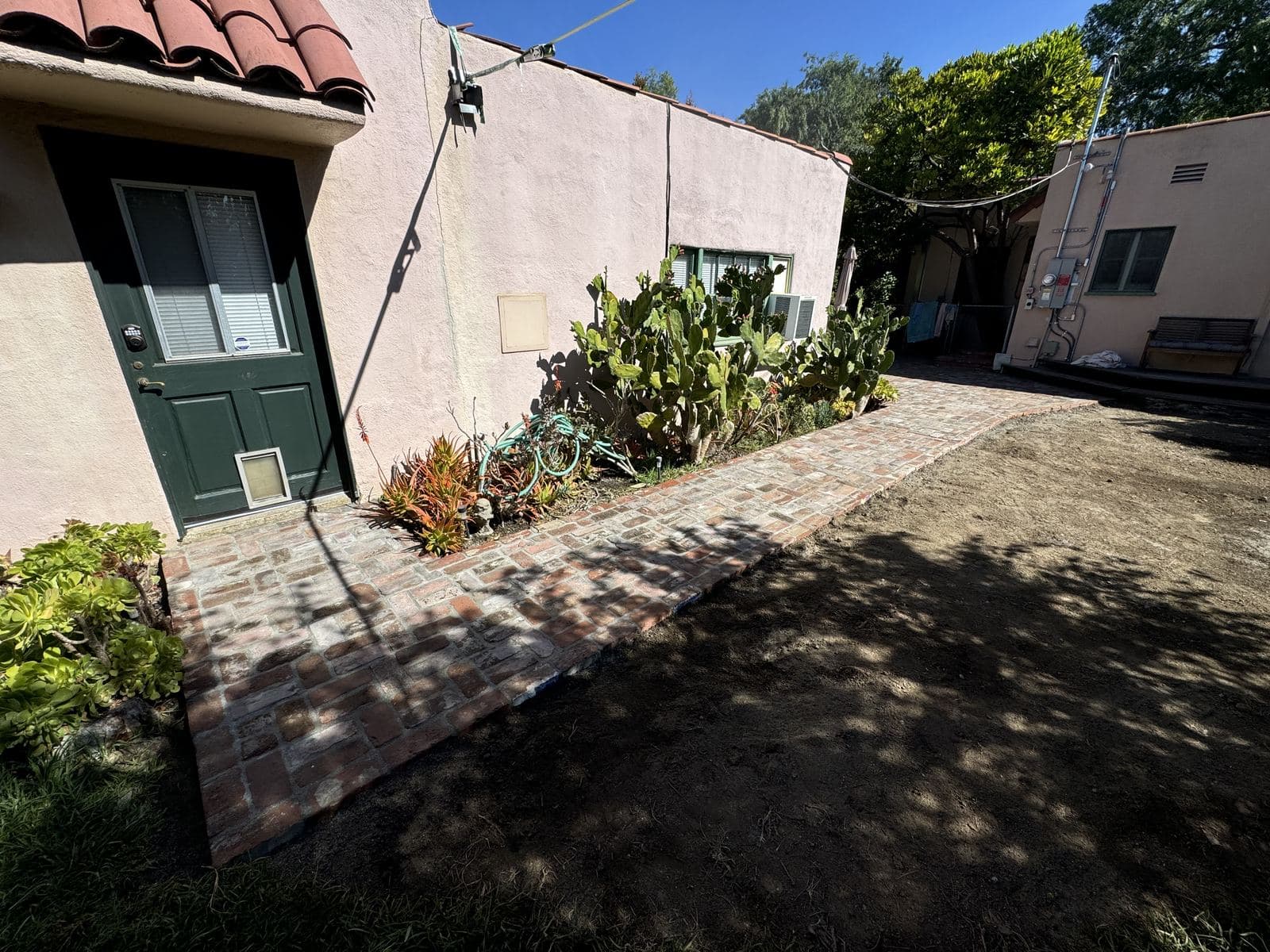
Partially complete walkway. Once the border course is set and the field starts filling in, the whole path starts to read. You can see the slight rusty tone variation across the reclaimed bricks - exactly the look we were after.
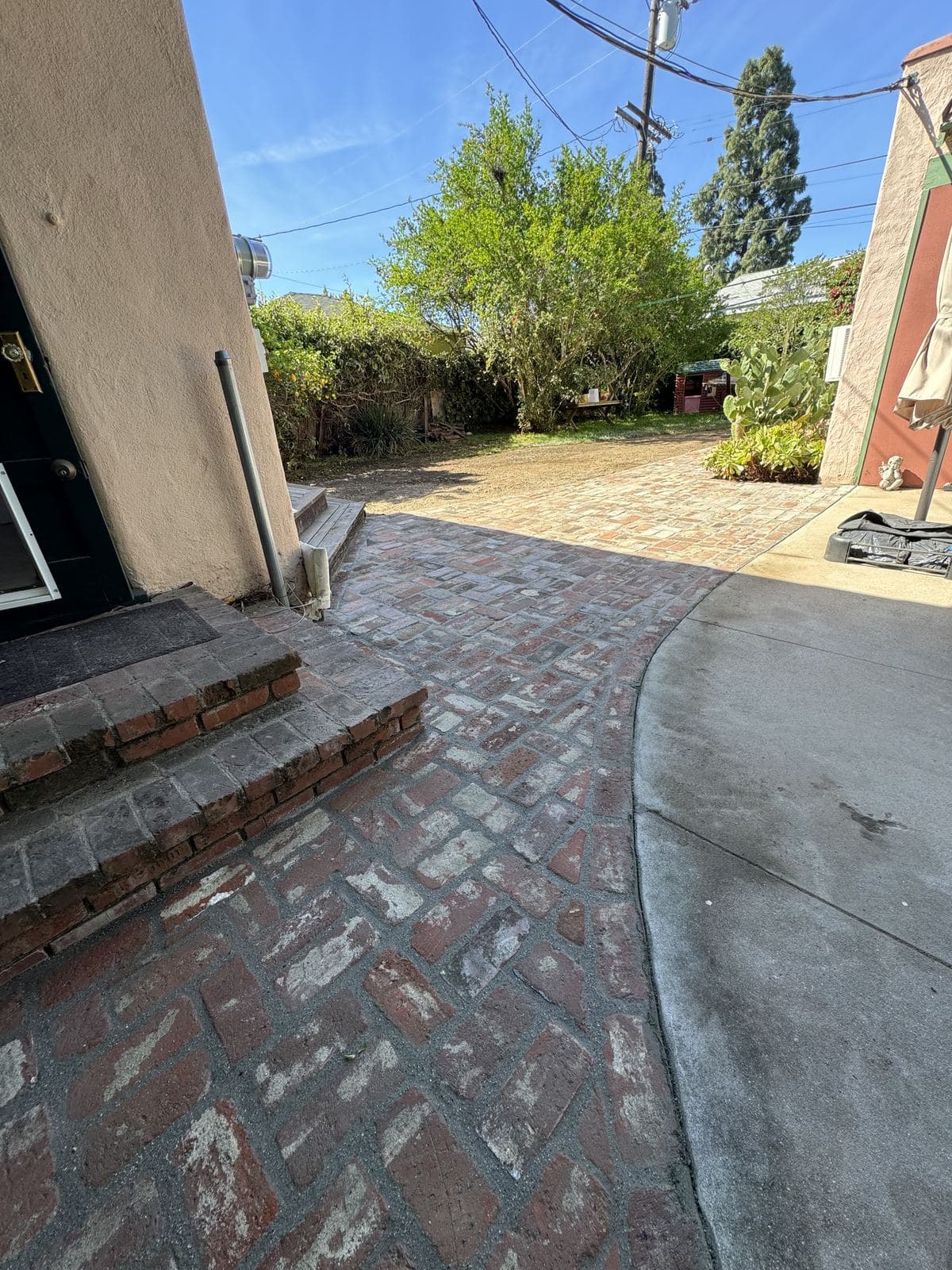
The finished walkway sweeping through the backyard toward the Spanish-style home. 300 square feet of reclaimed brick, correctly graded for drainage, laid on a stable compacted base. The backyard kept its original character - the walkway just works now.
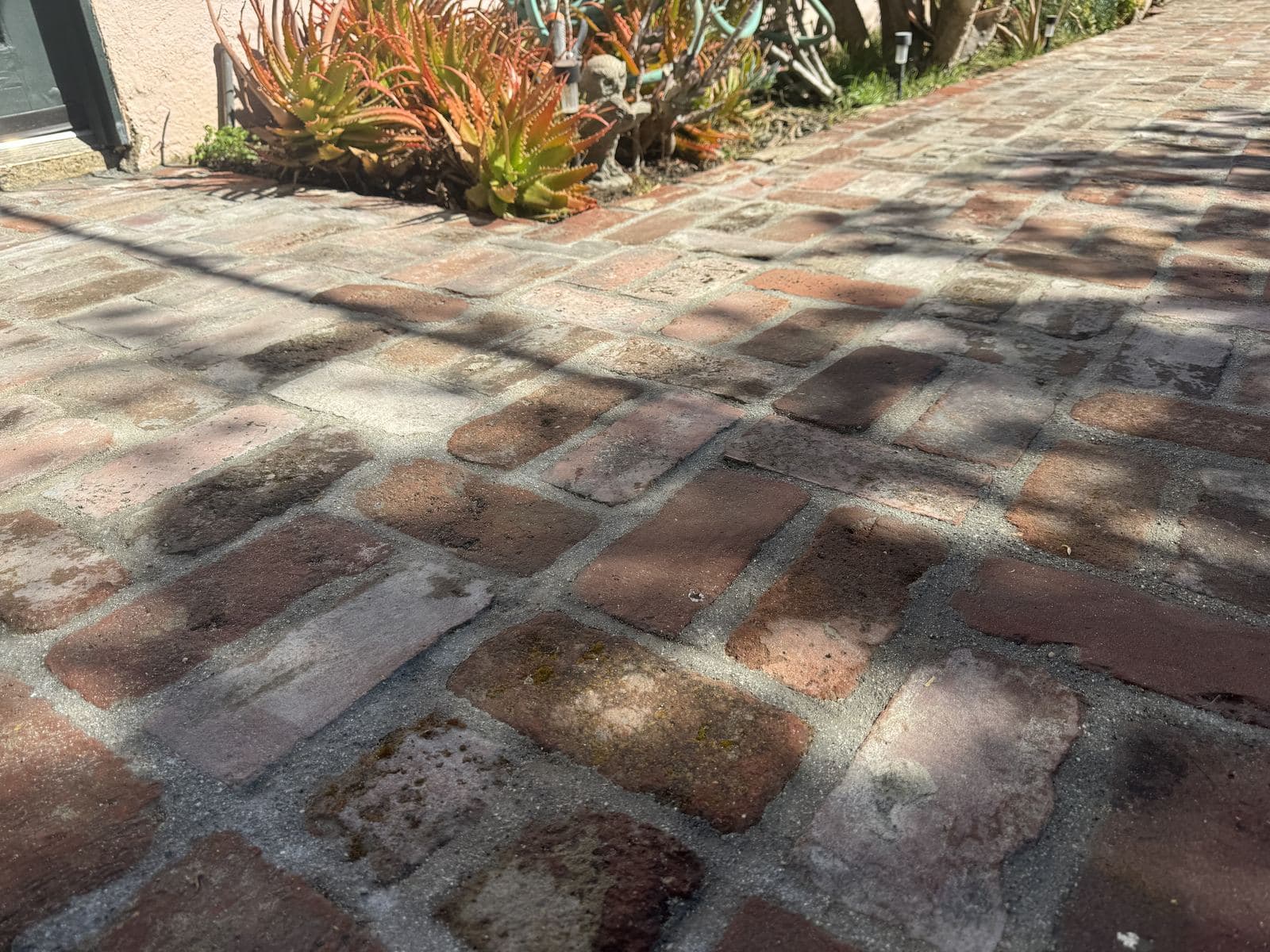
Close-up of the completed path. The rust, orange, and tan tones across the reclaimed bricks match the aesthetic the homeowner wanted to preserve. Up close you can see why sourcing the right brick mattered - this look does not come from a pallet of new material.
Finished walkway leading to a green wooden door of the 1931 Spanish-style cottage. Succulents and cacti hold the bed line. The new path ties the home, the landscape, and the existing backyard character into one coherent piece.
Wider view of the finished walkway curving through the yard toward the patio. The walkway was extended beyond the original footprint so moving through the backyard is genuinely easier now. No pooling after rain, no shifting bricks, and the original rusty character preserved.
Thinking About a Similar Project?
Buildda handles brick walkway, pavers, walkway, hardscape in Culver City and across Los Angeles. Licensed contractor #1131088.