


Typical cost, installed
$3,000 to $20,000
Depends on the finish and the site. See the price list.
City permit
Depends on the city
We check your city's rules, file the application, and you pay the city fees directly.
Our own jobs
One job with every step in photos
Culver City
Walkway Overview
A well-built walkway improves safety, accessibility, and curb appeal all at once. Whether you need a simple concrete path from the driveway to the front door or an elegant flagstone garden trail, the right walkway guides visitors naturally while tying your landscape together.
How Buildda Helps
Buildda grades the path, prepares a compacted base, and installs your chosen material with proper drainage pitch so water runs off rather than pooling. We match materials and patterns to your existing hardscape.
Licensed General Contractor · CA #1131088 · Founder, Buildda Inc.
Buildda Tip
Walkways should slope slightly away from the house at 1/4 inch per foot for drainage. A flat or inward-sloping walkway directs water toward your foundation. We grade every walkway we install for proper drainage.

The Culver City brick walkway job, step by step
See every step of the Culver City job
- The starting point. The existing brick path had been slipping for years - the base had failed, bricks had shifted, and every rainy season water stood on it. But the rusty, aged character was exactly what the homeowner loved. Our job was to rebuild the function without losing that look.
- Demo in progress. We pulled up the failing walkway carefully and stacked the old bricks. Some were reusable, but we needed far more matching brick than the existing supply could give us.
- Forklift loading a pallet of reclaimed brick at a salvage yard. Finding the right rusty-toned brick to match a decades-old walkway meant visiting 10-15 yards across the LA area. New brick would have looked wrong next to the original.
- When you find the right batch, you pack them however you can. Model X trunk floor-to-roof in reclaimed brick, protective plastic underneath. The hunt was the hard part - getting them home was the easy part.
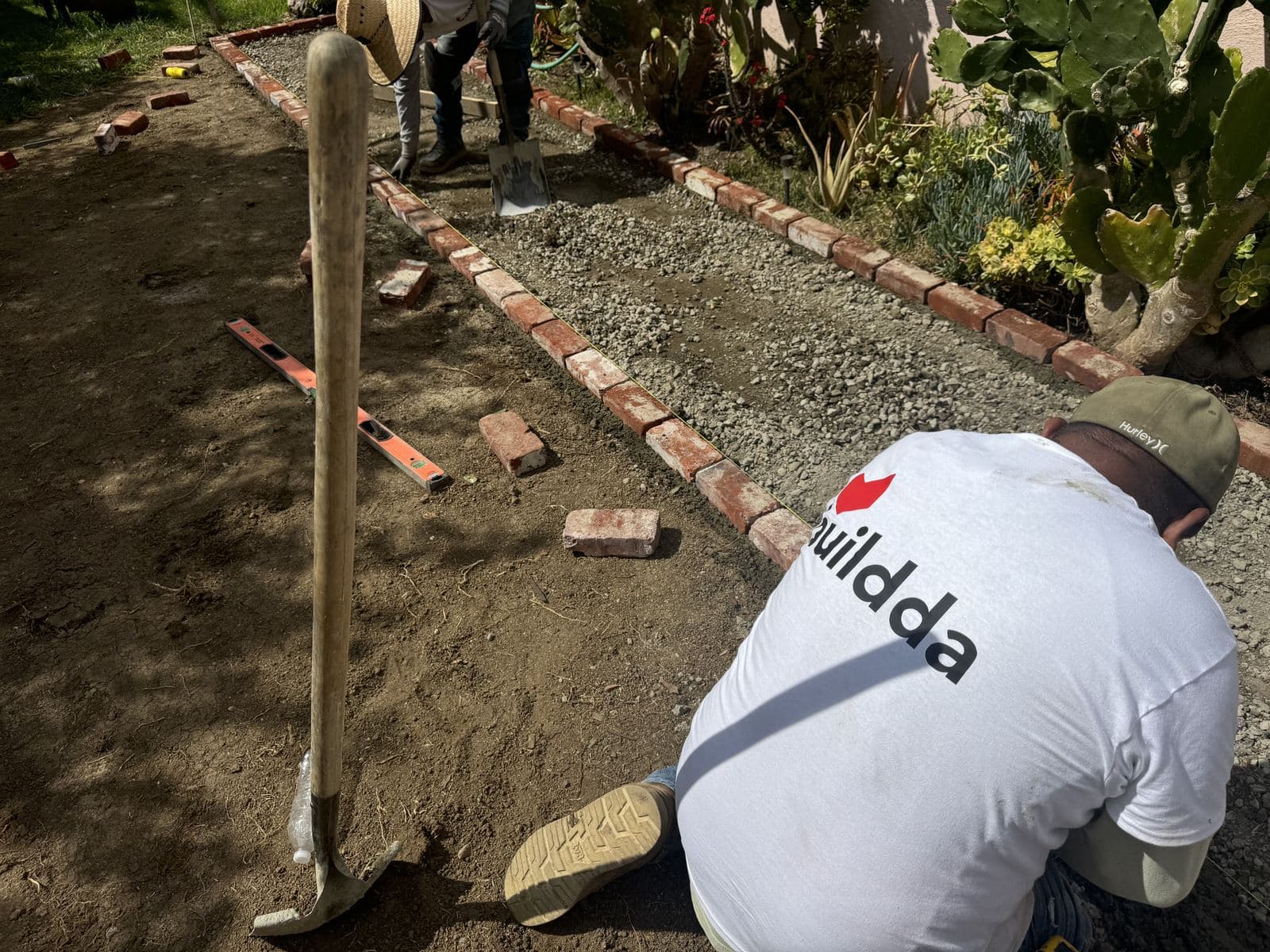
- Raking the sub-base smooth for the mortar bed. The underlying ground had been settling for years because a tree had been removed from that spot and the root mass decomposed over time. We added clean dirt and compacted it in lifts, then rebuilt the base.
- Relocating sprinkler heads around the cactus bed. The original irrigation was under the walkway path - we capped, re-ran, and tested each head so the landscape still gets water after the bricks go in.
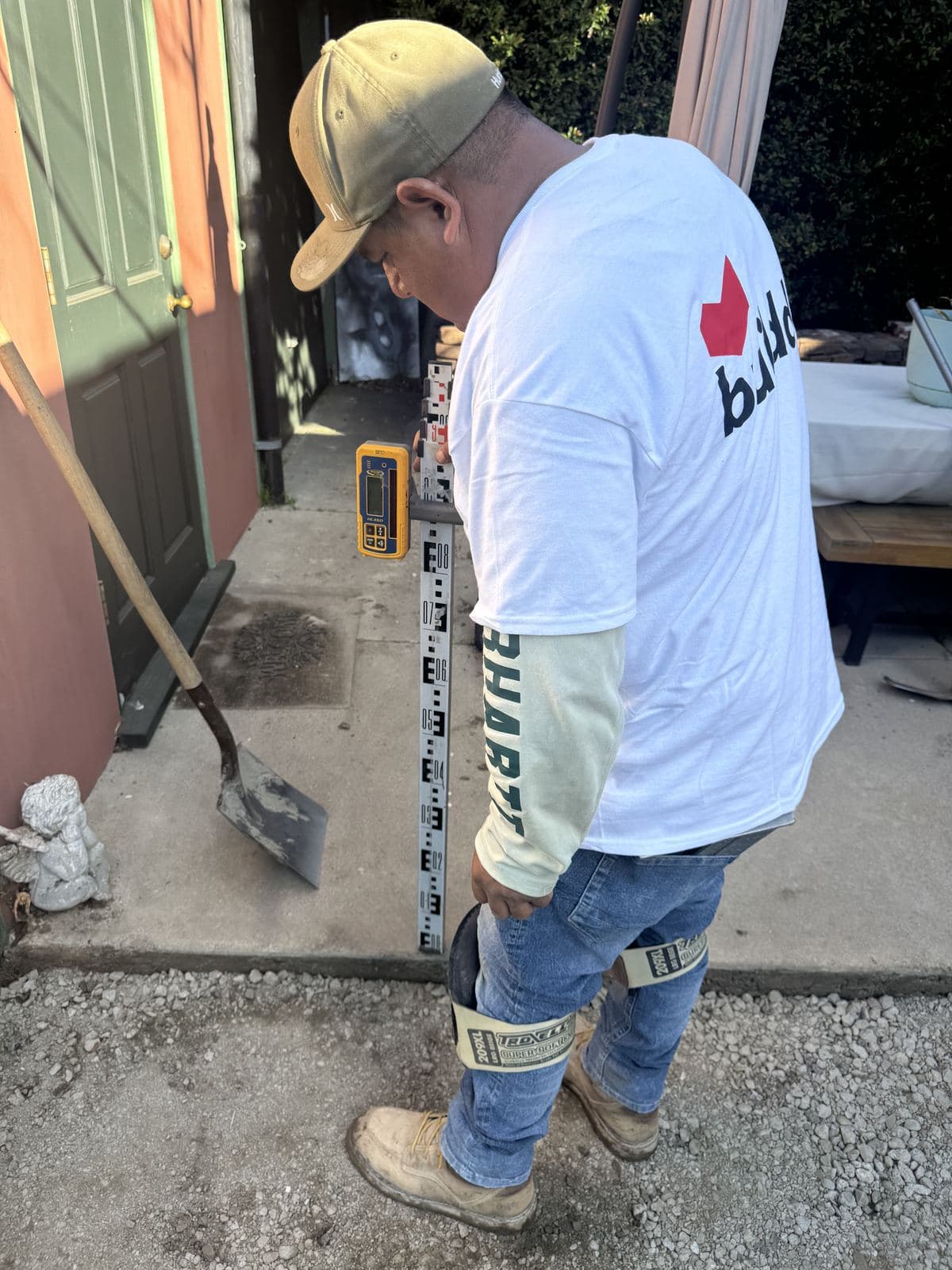
- Our rotating laser level set up over the prepped path. We use this to verify the drainage slope across the full 300 sqft run - every brick has to sit on a grade that sheds water cleanly without being obvious underfoot.
- Mason strings stretched above the freshly screeded base. These guide every brick to the right height and alignment so the walkway reads straight even where the path follows a curve.
- Partially complete walkway. Once the border course is set and the field starts filling in, the whole path starts to read. You can see the slight rusty tone variation across the reclaimed bricks - exactly the look we were after.
- Almost finished: the walkway sweeping through the backyard toward the Spanish-style home.
- Finished walkway leading to a green wooden door of the Spanish-style cottage. Succulents and cacti hold the bed line. The new path ties the home, the landscape, and the existing backyard character into one coherent piece.
- Wider view of the finished walkway curving through the yard toward the patio. The walkway was extended beyond the original footprint so moving through the backyard is genuinely easier now. No pooling after rain, no shifting bricks, and the original rusty character preserved.
What to Know Before You Start
Walkway failures show up as cracked concrete, settling pavers, or trip hazards at joints, almost always because the base under the surface was undersized or compacted improperly. 4-6 inches of compacted gravel with a slight cross-slope for drainage is the standard for residential walkways. The surface choice (concrete, brick, flagstone, pavers) is the visible part; the base is what makes it last 25-50 years instead of 5-10.
As your general contractor (CA #1131088, B/General), Buildda coordinates the project; the hardscape crew working on your job lays walkways every day. Real expertise comes from doing one trade every day.
What You Get
What the work included on our own job, from the job record: Culver City.
Fixing the Function
Every rainy season water pooled on the old Carlson Park path in Culver City: it had no drainage plan, the base had failed, and settling had made it a slipping hazard. The job was to fix the function and keep the look.
Ground Rebuilt in Lifts
The ground under the path had been settling for years. Clean dirt was spread in lifts and each layer compacted before a single brick went down, so the new walkway would not sink in a year.
Sprinklers Re-Run
Every sprinkler head in the way was mapped, capped and re-run, and the landscaping around the path adjusted, so irrigation still reaches the plants after the walkway went in.
Rain Runs Off Now
A gentle organic slope replaced the flat grade, checked with a rotating laser level across the whole run, so rain runs off the walkway instead of pooling on it.
A Comfortable Path
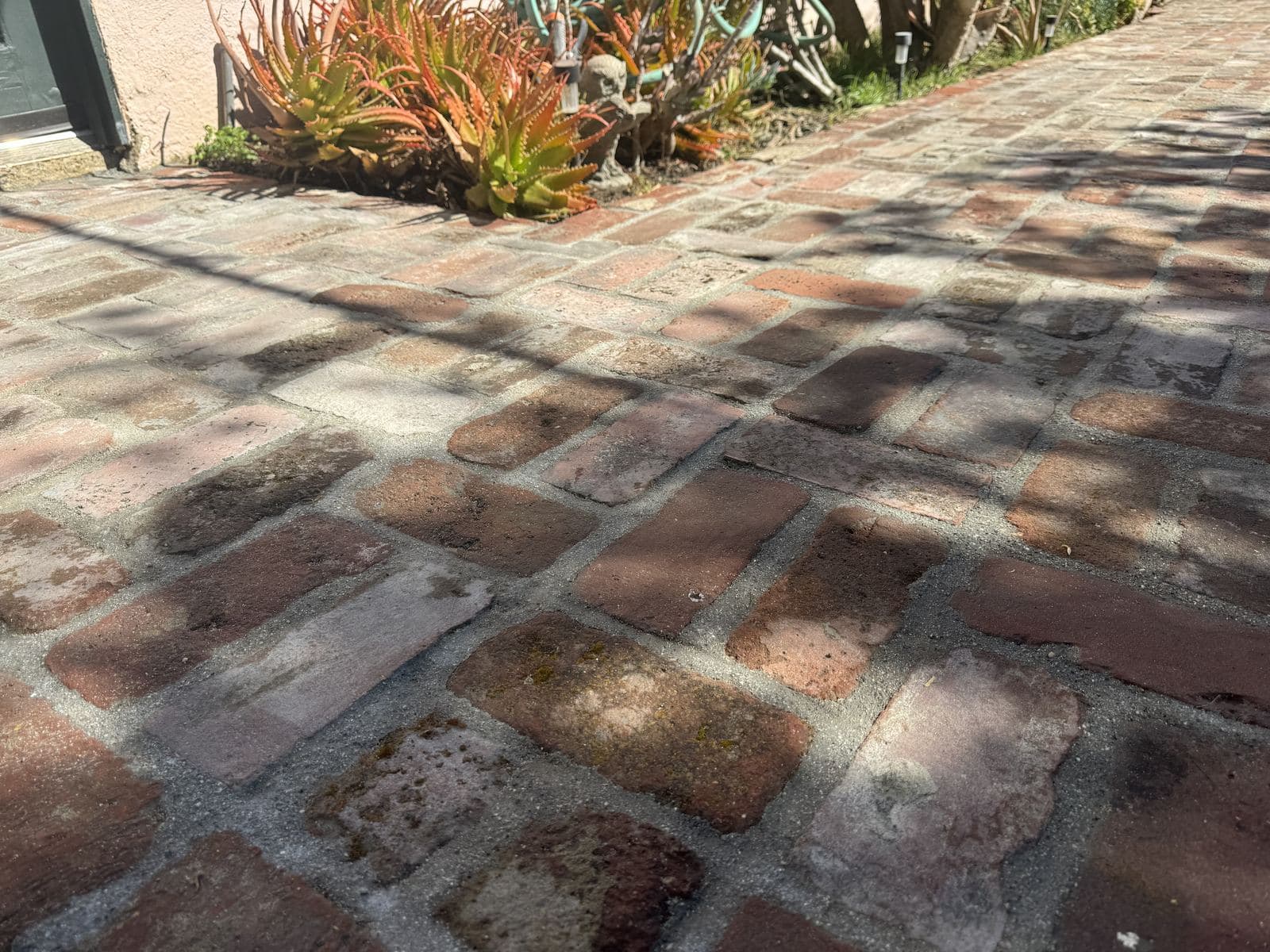
The walkway was extended beyond its original footprint, so walking through the yard is comfortable now, with no more awkward narrow path. It is 300 square feet of reclaimed brick, laid tight and grouted.
Eight Days, Demo to Sweep
The rebuild took eight days on site, from demo to the final sweep, and the finished walkway looks like it has always been there.
Reviews From All Our Work
Homeowners with driveway and paver jobs, work close to walkway.
“I recently had pavers installed on my driveway by Buildda, and the results are fantastic! They were professional, detail oriented, and completed the project on time. I highly recommend this company and will definitely be...”
*Individual results may vary.
“I used Buildda to install new pavers in my backyard, and the transformation is fantastic. The team communicated clearly from the start, and the job stayed on schedule with no surprises. The pavers are beautifully laid...”
*Individual results may vary.
Transparent Pricing
Guide the Way with Style
Typical project range: $3,000 - $20,000
Pricing depends on project scope, materials, and site conditions. Here are typical ranges for walkway projects in Los Angeles.
Basic
$3,000-$8,000
Homeowners needing a functional, durable path on a budget
- Concrete walkway
- Broom or exposed aggregate finish
- 3-4 ft width
- Basic edge work
Decorative
$8,000-$14,000
Those wanting an attractive walkway with character
- Paver walkway
- Standard patterns
- Contrasting border
- Polymeric sand joints
- Quality edging
Premium
$14,000-$20,000
Homeowners seeking a distinctive, high-end path
- Flagstone or natural stone
- Custom design and layout
- Integrated lighting prep
- Complex patterns
- Premium materials throughout
- Landscape integration
All prices are estimates. Actual costs vary based on project scope, site conditions, material selections, and permit requirements.
What Changes the Price and the Schedule
The price
- Total linear feet
- Walkway width
- Material selection
- Pattern complexity
- Site preparation needs
- Existing path removal
- Lighting integration
- Steps or elevation changes
The schedule
- Walkway length and width
- Material selection
- Design complexity
- Existing path removal
- Weather conditions
- Site accessibility
Permits and Inspections
Whether a job like this needs a permit depends on your city and the work; we check the rules for your job before we start. The permits that can apply:
- Building permit (rarely required for walkways)
- Right-of-way permit (if near sidewalk or property line)
- Whether a walkway needs a permit depends on your city and where it goes
- Permits may be needed for walkways in public right-of-way
- We verify requirements for your specific project
- HOA approval may be needed in some communities
Watch Our Work
New Concrete Driveway, Demo to Broom Finish
Culver City, CA
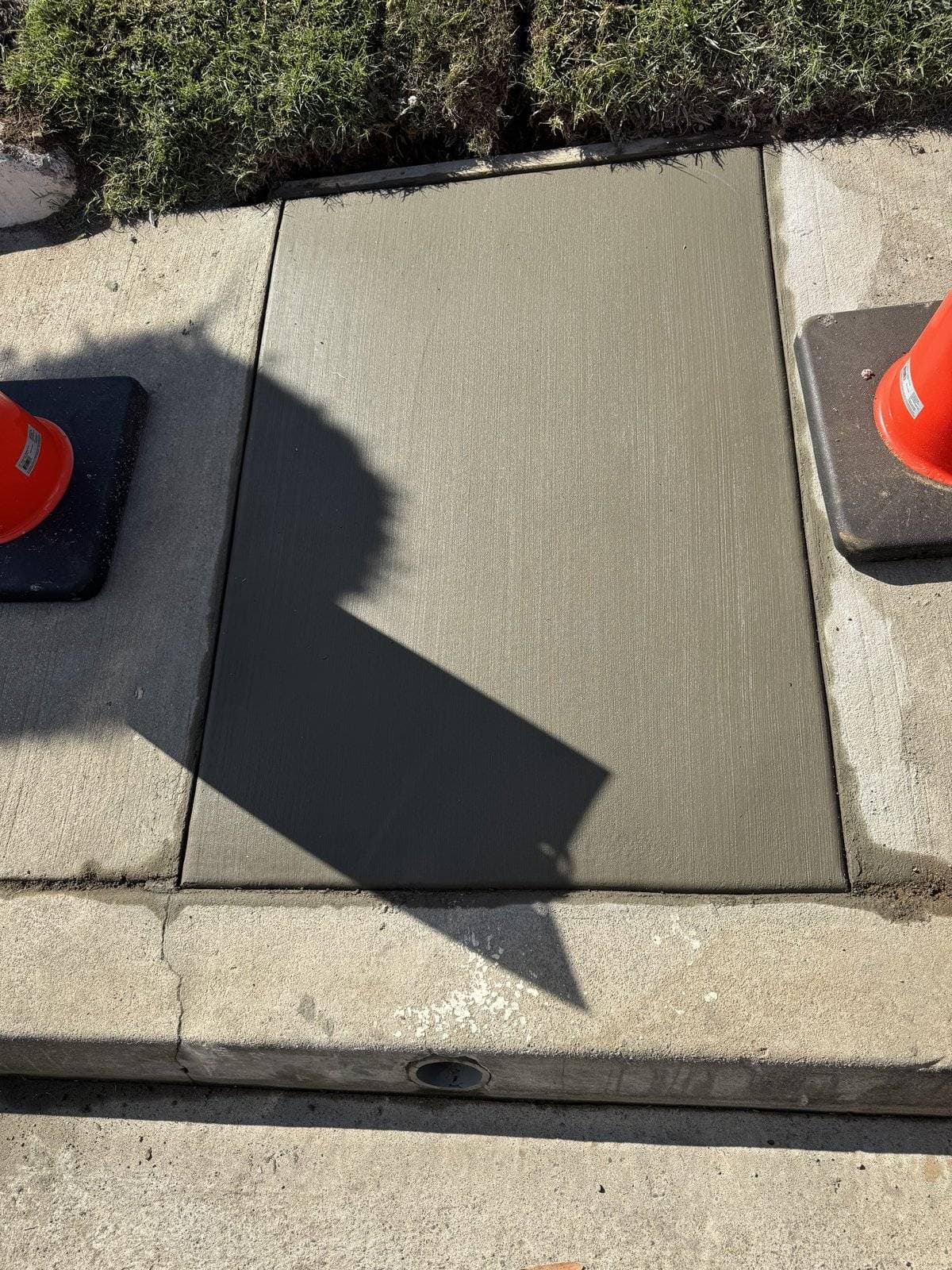
Old asphalt out, sidewalk cut for the new drain, city signed off

Concrete Driveway Apron Installation
Los Angeles, CA
City-permitted approach with smooth curb transition
Frequently Asked Questions
Common questions about walkway projects
Who can rebuild a brick or paver walkway near Culver City?
Buildda, Inc., a general contractor based in Culver City (CSLB B General #1131088). On our Carlson Park job in Culver City we rebuilt a failing backyard brick walkway with reclaimed brick matched to the original, fixed the drainage with a gentle slope, relocated the sprinklers and extended the walkway beyond its original footprint. Eight days on site, from demo to final sweep.
Why does a brick walkway sink or hold water?
Often it is what is underneath. On our Carlson Park walkway a tree had been removed years earlier and the ground kept settling as the old roots decomposed, and the flat grade let rain pool every season. We brought in clean dirt, compacted it in lifts, and set a gentle slope, checked with a rotating laser level before any brick went down.
What material is best for a walkway?
It depends on your goals and budget. Concrete is affordable and versatile. Pavers offer beauty and easy repairs. Flagstone provides natural elegance. We'll discuss pros and cons of each during your consultation and recommend what works best for your home.
How wide should a walkway be?
A main front walkway should be at least 4 feet wide to allow two people to walk side by side. Side paths can be 2-3 feet. We recommend 4-5 feet for a welcoming entrance. Wider paths feel more generous and accessible.
Can you replace just part of a walkway?
In some cases, yes. Pavers and stone can often be partially replaced. Matching existing concrete is more challenging due to color differences. We'll assess your situation and recommend whether partial repair or full replacement makes more sense.
How do I keep weeds from growing in my walkway?
For paver walkways, we use polymeric sand that hardens and prevents weed growth in joints. Proper base preparation also helps. Regular maintenance and occasional reapplication of polymeric sand keeps weeds at bay.
Can you add lighting to my walkway?
Yes. Integrated pathway lighting enhances safety and ambiance. We can install low-voltage LED lights along your walkway or prepare conduit for a future lighting system. We coordinate with electricians as needed.
How long will a walkway last?
Concrete walkways last 20-30 years. Paver walkways can last 50+ years. Natural stone is extremely durable, lasting 50+ years with proper care. The key is quality installation, proper base preparation, and occasional maintenance.
Keep Reading
Reclaimed Brick Walkway: Carlson Park Case Study
A failing brick walkway in Carlson Park rebuilt with reclaimed brick, proper drainage, and a stable base after years of soil settling. Costs by material, base prep, sourcing, and what every LA homeowner should know about walkway design.
Sloped Yards: Drainage, Walls, and Path Design
Sloped-yard design guide for Southern California: retaining walls ($20-80/sqft), terracing ($15K-80K), drainage solutions, paths and steps. Includes a Carlson Park case study where settling soil and bad drainage destroyed a backyard walkway.
Driveway Materials: Concrete, Pavers, Asphalt
Compare the pros, cons, and costs of concrete, paver, and asphalt driveways for Southern California homes. Learn which material fits your needs and budget.
Stamped Concrete Patterns & Design Ideas
Discover stamped concrete patterns, colors, and applications - a cost-effective alternative to natural stone and pavers.
Culver City Driveway Permit: What It Took on a Real Job
A real Culver City driveway job: about four months of permit review, a drain tied to the curb drain, city bins for the debris, and the city fees on the project.
Walkway Near You
Our own walkway jobs first, then the cities we serve, nearest to our Culver City base first.
Ready to Start Your Walkway Project?
Start with a text about your walkway, and add a photo if you have one. A real person on our team replies.
Or call (310) 266-5744, Monday to Saturday.
Scan to text us from your phone
or text (310) 266-5744